Have you ever found a pair of sheepskin boots that looks almost perfect, but the color, boot height, or sole is not quite right? Standard styles do not always match your brand's vision.
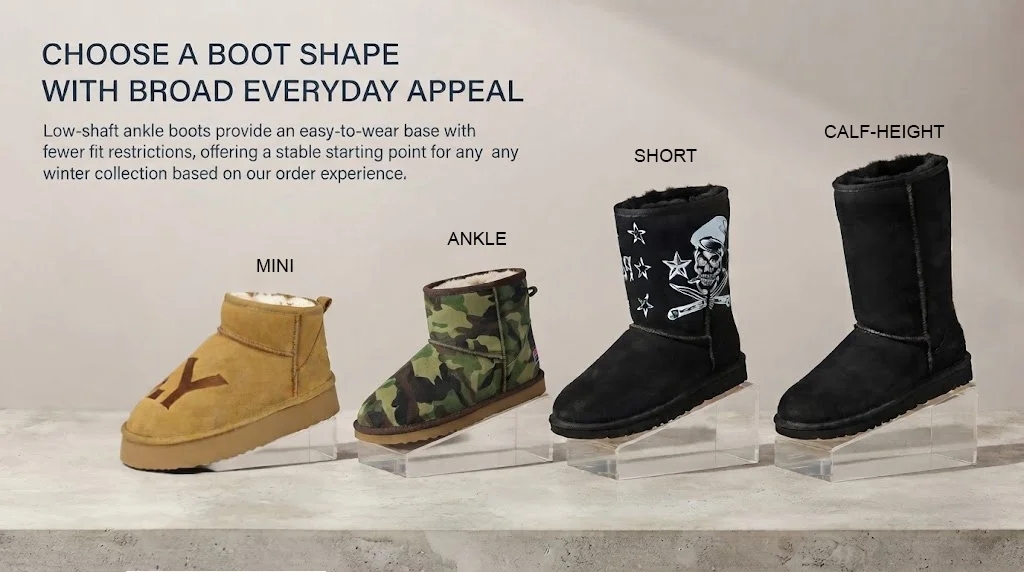
Yes, I can customize sheepskin boots in different colors, four boot heights (Mini, Ankle, Mid and Half), and three sole options: EVA, TPR, and Rubber. This allows you to create footwear that matches your brand's style and target market.
When I work with brands and wholesale buyers, I know that product details can make a big difference. A small change in color or boot height can create a completely different look. The same is true for sole materials. Some buyers want lightweight boots for everyday use, while others prefer soles with more structure and durability. So, what customization options can I offer for your sheepskin boots?
Can You Customize the Colors of Sheepskin Boots?
Choosing the right color is one of the first steps when I develop custom sheepskin boots. A good color can help a product fit your brand identity and attract your target customers.
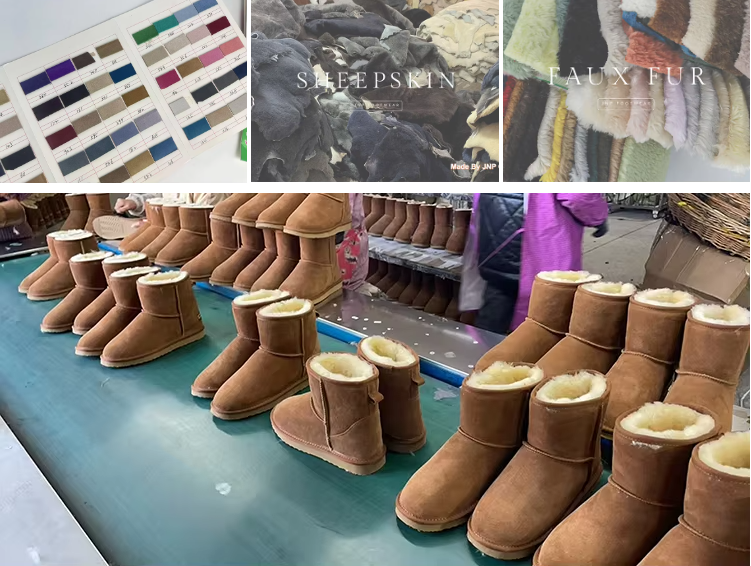
Yes, I can offer different color options for custom sheepskin boots. You can choose classic colors, natural shades, or fashion colors based on your collection and market needs.
1. Classic Colors for Everyday Collections
I often recommend classic colors for brands that want to build a collection with long-term sales potential.
Some popular color choices include:
- Chestnut
- Black
- Chocolate Brown
- Grey
- Beige
- Sand
- Cream
These colors are easy to match with different outfits. They also work well for autumn and winter collections.
For example, I may suggest chestnut and sand for a brand that wants a natural and warm collection. Black and chocolate brown can be good choices for customers who prefer a simple and classic look.
2. Fashion Colors for Seasonal Collections
Some brands want more than basic colors. They want products that stand out and follow current fashion trends.
In this case, I can discuss additional color options with the buyer. These may include pink, blue, green, or other shades that fit the brand's collection.
I believe color customization is especially useful for fashion brands. A familiar boot shape can look completely different when the color changes.
3. How Do I Help You Choose the Right Colors?
I usually suggest that buyers consider three things before confirming their colors.
| Consideration | What I Suggest |
|---|---|
| Brand identity | Choose colors that match your existing products |
| Target customers | Consider the age and style preferences of your buyers |
| Sales season | Select colors that fit your autumn and winter collections |
I also recommend confirming the color through a physical sample or an approved Pantone color matching system1 reference before bulk production. Screen colors and actual material colors may look different.
For buyers with multiple SKUs, I can help organize the color list and customization details. This is important because different colors must be clearly identified during sampling and production to maintain color consistency in manufacturing2.
What Boot Heights Can You Customize?
Boot height changes the overall appearance of sheepskin boots. Some customers prefer short boots that are easy to wear, while others like higher boots that provide more coverage.
I offer four main height options: Mini, Ankle, Mid and Half. Each option creates a different product style and gives your brand more flexibility when developing a collection.
1. Mini Sheepskin Boots: Are They Good for a Casual Collection?
Mini boots have a short shaft and a simple appearance. I often recommend this style for brands that want lightweight-looking and easy-to-style winter footwear.
Mini boots work well with jeans, leggings, and casual outfits. They are also a good choice for buyers who want a simple style that can appeal to a wide customer group.
2. Ankle Sheepskin Boots: Are They a Versatile Option?
Ankle boots provide more coverage than Mini boots but still have a relatively short shaft.
I think this height is a useful option for brands that want a balance between fashion and everyday wear.
Ankle boots can work with different clothing styles. They are also suitable for customers who do not want the shaft to cover too much of their legs.
3. Mid Sheepskin Boots: Do They Offer More Coverage?
Mid boots have a higher shaft than Mini and Ankle styles. They create a more traditional winter boot appearance.
I recommend this option for buyers who want a classic sheepskin boot collection. The higher shaft also gives brands more room to develop different design details.
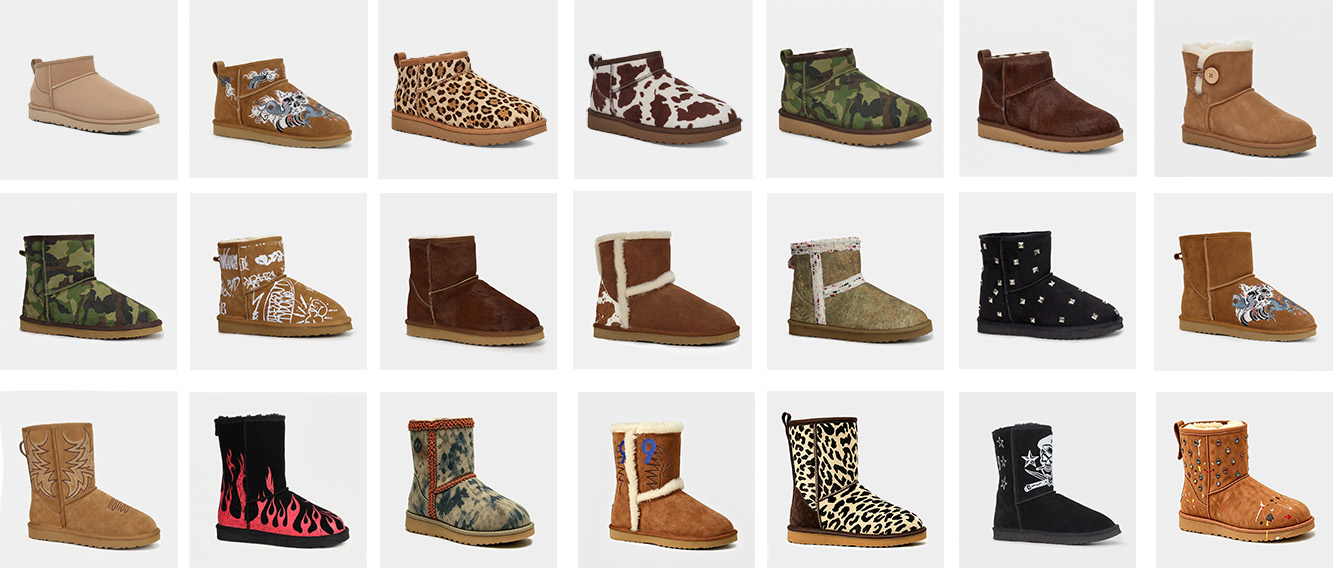
For example, you can consider different upper colors, logo placements, and decorative elements to create a more recognizable product.
4. Half Sheepskin Boots: Are They Suitable for a Different Look?
Half boots offer another height option for brands that want more variety in their collections.
I can develop this style based on your reference design and required measurements. Before production, I recommend confirming the exact shaft height with a sample.
The name of a boot height does not always mean the same measurement across different brands. So, I prefer to confirm the actual height in centimeters rather than rely only on style names.
Comparing the Four Boot Heights
| Boot Height | Main Appearance | Suitable For |
|---|---|---|
| Mini | Short shaft | Casual everyday styles |
| Ankle | Around ankle height | Versatile fashion collections |
| Mid | Medium-height shaft | Classic winter collections |
| Half | Higher shaft | Brands looking for more coverage |
I suggest choosing two or three heights when you want to develop a collection with different styles. You do not need to use every height in one order.
For example, a brand could combine Mini and Ankle boots for a casual collection. Another brand could choose Ankle and Mid boots to offer more variety.
The important thing is to make sure that the selected heights match your target customers and product positioning.
Can You Choose Different Sole Materials for Custom Sheepskin Boots?
The sole is another important part of custom sheepskin boots. It affects the product's weight, flexibility, appearance, and overall wearing experience.
Yes, I can customize sheepskin boot soles using three material options: EVA, TPR, and Rubber. Each material has different characteristics, so I suggest choosing based on your product design and target price.
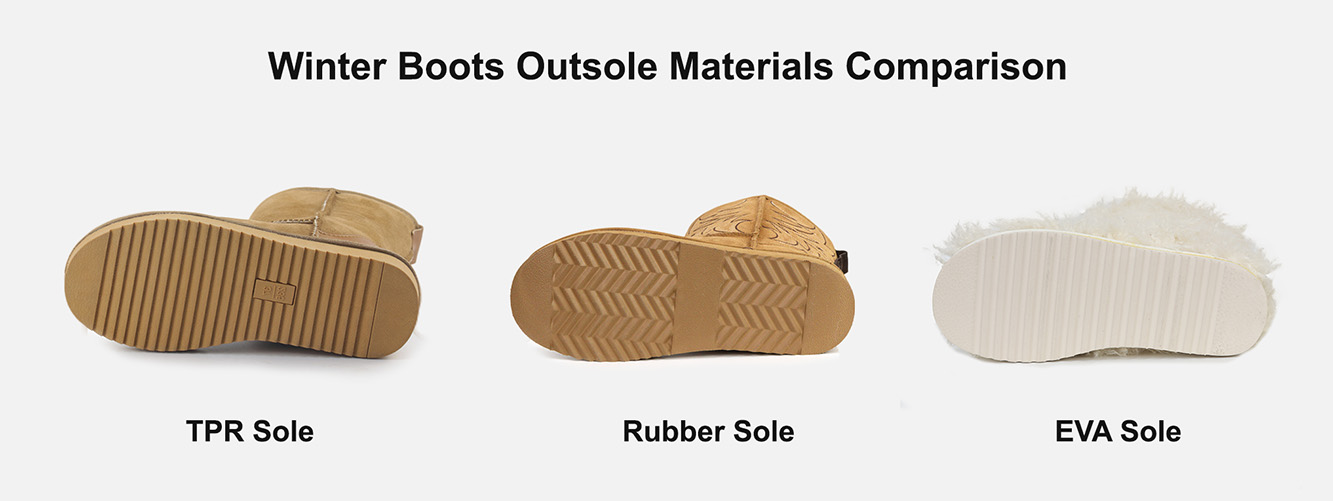
1. EVA Soles: Are They a Good Choice for Lightweight Boots?
EVA (Ethylene Vinyl Acetate)3 is a popular material for footwear soles because of its lightweight properties.
I recommend considering EVA when your brand wants to develop lightweight and comfortable everyday sheepskin boots.
Some main characteristics of EVA soles include:
- Lightweight construction.
- Soft and flexible feel.
- Good cushioning properties.
- Suitable for casual footwear designs.
For brands targeting customers who value lightweight footwear, EVA can be a good option.
However, the final performance also depends on the sole formulation, density, and construction. I recommend testing a sample before confirming the material for bulk production.
2. TPR Soles: Are They Suitable for Everyday Footwear?
TPR (Thermoplastic Rubber)4 is commonly used in footwear because it combines rubber-like properties with thermoplastic processing.
I suggest TPR for buyers who want a sole with a more structured feel than many lightweight EVA options.
Some characteristics of TPR soles include:
- Good flexibility.
- A relatively substantial feel.
- Different possible tread patterns.
- A wide range of design options.
TPR can be a practical choice for everyday sheepskin boots. Buyers can also consider different sole colors and patterns to match the upper design.
I usually suggest checking the actual sole sample because the hardness, weight, and grip can vary between different formulations.
3. Rubber Soles: Are They Better for a More Substantial Boot?
Rubber is another option for custom sheepskin boots. It is often selected for its durability and grip characteristics.
I recommend considering rubber when your brand wants a more substantial sole or a design with a traditional outdoor-inspired appearance.
Some common characteristics include:
- Good abrasion resistance.
- Good grip potential.
- A solid and substantial feel.
- Different tread and outsole designs.
The abrasion resistance of rubber5 depends on the rubber compound and outsole construction. Rubber soles may be heavier than EVA soles, depending on their construction. So, I suggest considering the overall boot weight when choosing this material.
I also recommend considering footwear slip resistance testing6 when evaluating outsole grip for your target market.
EVA vs. TPR vs. Rubber: Which Sole Should You Choose?
| Sole Material | Main Characteristics | Suitable Product Direction |
|---|---|---|
| EVA | Lightweight and flexible | Lightweight casual boots |
| TPR | Flexible and structured | Everyday footwear |
| Rubber | Durable and substantial | More robust boot designs |
I do not think there is one sole material that is best for every sheepskin boot.
For example, if your brand focuses on lightweight casual footwear, I would first consider EVA. If you want a more structured sole, TPR may be worth considering. If you want a more substantial outsole with good abrasion resistance, I would look at rubber.
I also suggest considering the sole thickness, tread pattern, hardness, and color. These details can change the final appearance and wearing experience.
Before bulk production, I recommend testing the complete boot rather than judging the sole material alone. The upper, lining, sole, and overall construction all affect the finished product.
How Can You Combine Colors, Boot Heights, and Sole Materials for Your Own Collection?
Having different customization options is useful, but the real value comes from combining them in the right way.
When I work with wholesale buyers, I encourage them to think about the complete product collection instead of choosing each detail separately.
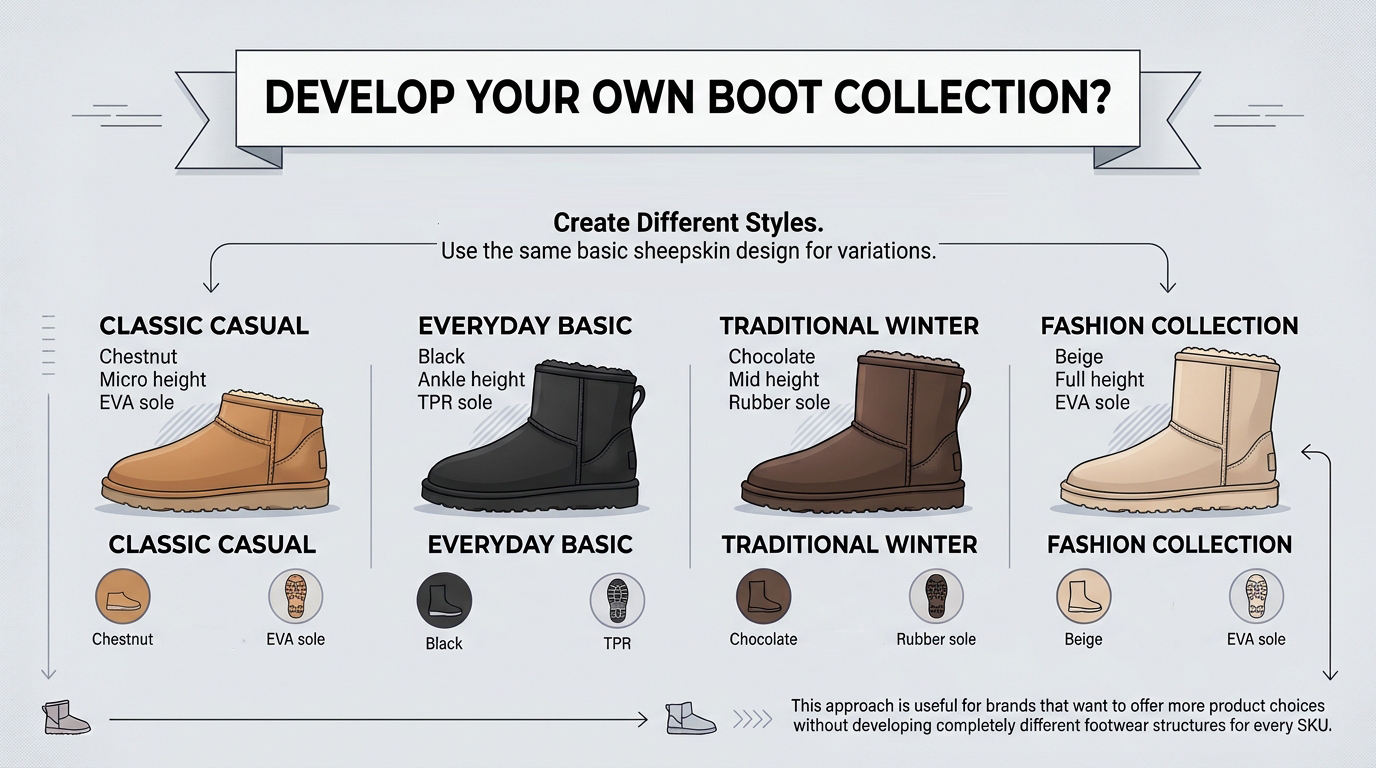
1. Create Different Styles for Different Customer Groups
You can use the same basic sheepskin boot design to develop several product variations.
For example:
| Product Style | Color | Height | Sole |
|---|---|---|---|
| Classic Casual | Chestnut | Mini | EVA |
| Everyday Basic | Black | Ankle | TPR |
| Traditional Winter | Chocolate | Mid | Rubber |
| Fashion Collection | Beige | Half | EVA |
These are only examples. You can change the colors, heights, and sole materials according to your own design.
I believe this approach is useful for brands that want to offer more product choices without developing completely different footwear structures for every SKU.
2. Consider Your MOQ and SKU Planning
One challenge I often see among wholesale buyers is the need for many styles and colors but relatively small quantities per SKU.
This is especially common for small and medium-sized fashion brands.
For example, you may want to develop four boot heights and several colors, but you may not want to order a large quantity of every combination.
I understand this concern. My business model is focused on B2B wholesale, and I work with different factory partners based on product designs and order quantities.
For trending styles with custom branding, I can also discuss low-minimum order quantity (MOQ)7 customization possibilities.
The actual MOQ depends on the selected materials, colors, sole construction, and factory production requirements. I prefer to confirm these details before giving you a quotation.
3. Confirm Your Design Before Bulk Production
I always recommend preparing a clear product specification before starting bulk production.
Your specification can include:
- Upper material and color.
- Boot height and shaft measurements.
- Sole material.
- Sole color and thickness.
- Logo design and placement.
- Size range.
- Packaging requirements.
A detailed footwear product specification8 helps reduce misunderstandings during production.
For buyers who have many SKUs, I also recommend using a product specification sheet for each style. This makes it easier to track different colors, heights, and sole combinations. Understanding how SKU (Stock Keeping Unit)9 identification works can also help organize different product variations.
I work with eight long-term factory partners that can handle different production processes and product requirements. Some partners focus on small custom orders, while others have experience with brand collaboration and larger production needs.
I select suitable production resources based on each buyer's design and order quantity. This gives me more flexibility when handling different customization projects.
Why Work With Me for Custom Sheepskin Boots?
Finding a supplier is not only about finding a factory that can make a product. I believe good communication, product development, and production management are also important.
At Yangzhou JNP Imp. & Exp. Co., Ltd., I focus on B2B wholesale footwear and customized products.
I have 6–7 years of experience in cross-border e-commerce. During this time, I have worked with different types of buyers, including fashion brands, online trendy brands, and wool distributors.
I understand that different buyers have different needs.
Some brands need many colors and complex customization details. Some need small-batch production for new trending styles. Others want stable production and competitive prices for traditional footwear.
I work with different factory partners to find suitable production solutions for these requirements.
My customization services include:
- Different boot colors.
- Mini, Ankle, Mid, and Half boot heights.
- EVA, TPR, and Rubber sole options.
- Custom logos and branding.
- Different product designs.
- Material and construction options based on project requirements.
I also work with logistics partners to provide door-to-door shipping services, helping buyers manage the process from production to delivery.
My goal is simple: Make Comfortable Footwear with Styles.
Conclusion
I can customize sheepskin boots in different colors, four heights, and three sole materials. You can combine these options to create a collection that matches your brand.
Footnotes
-
This resource explains how standardized color references help brands and manufacturers communicate accurate color requirements during product development. ↩
-
This resource explains why color consistency matters in manufacturing and how approved color standards and samples help reduce color differences between production batches. ↩
-
This resource explains EVA's material properties, including its lightweight construction, flexibility, and cushioning characteristics, helping buyers understand its suitability for footwear soles. ↩
-
This resource explains the composition, processing characteristics, and common footwear applications of TPR, helping buyers distinguish it from other sole materials. ↩
-
This resource explains how rubber compounds and material properties influence abrasion resistance, helping buyers understand durability considerations when selecting outsole materials. ↩
-
This resource explains footwear slip-resistance testing methods and why outsole design and material selection matter when evaluating grip performance. ↩
-
This resource explains how MOQ works in wholesale manufacturing and why order quantities can vary depending on materials, customization, and production requirements. ↩
-
This resource explains the essential information in a footwear technical specification, helping buyers and manufacturers communicate product requirements accurately before production. ↩
-
This resource explains how SKUs identify individual product variations, helping brands organize different boot styles, colors, sizes, and customization combinations. ↩