A custom embroidered velvet slipper order of 300 pairs sounds small. For most footwear factories, it isn't worth opening a line for.
We run these orders regularly — for luxury hotel amenity programs1 and home brand clients — and reorders sometimes come in at exactly 300 pairs.
As a footwear supply chain manager working inside Yangzhou's shoe cluster, we can take these orders because of infrastructure we already have in place, not because we're cutting corners on the shoe.
Why 300 Pairs Breaks Normal Footwear Economics
A new slipper style needs its own last2, its own die-cut pattern3, and pattern adjustments before a single pair gets made — and those tooling costs4 get amortized across the run. The bigger the order, the less each pair carries.
Below a certain volume, most factories simply lose money opening a line for you.
Fabric adds a second wall. Many mills won't cut a run under 300 yards. If a brand wants a genuinely custom fabric — their own color, their own texture spec — that MOQ5 climbs far higher.
This is the real reason small custom orders get turned down. It isn't that suppliers don't want the business; the tooling math doesn't work at that size.
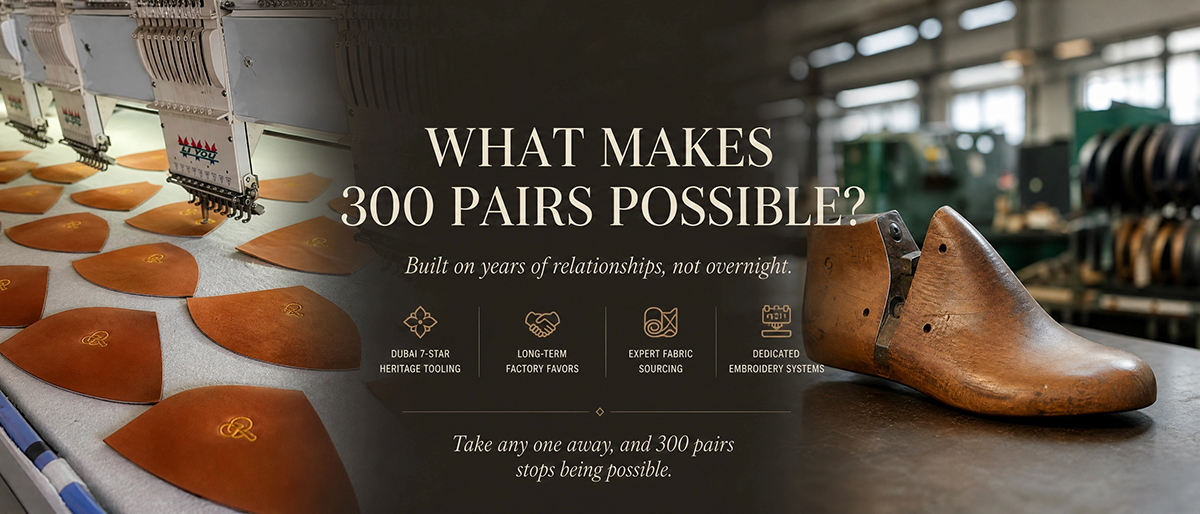
What Makes 300 Pairs Possible for Us
This exact construction started as a suite-amenity item for Dubai's 7-star hotel projects — which means we already had the last on file, no new tooling cost to open the style again.
From there, three things came together over years, not overnight:
-
Our die-cutting and pattern-adjustment partners are factories we've worked with for years on larger orders elsewhere. They'll run a small batch for us as a favor to the relationship — something they wouldn't do for a first-time customer walking in with a 300-pair ask.
-
Our sourcing team has spent years building relationships with smaller fabric suppliers who will actually cut a sub-300 run. That list doesn't exist if you're cold-sourcing fabric for a one-off order.
-
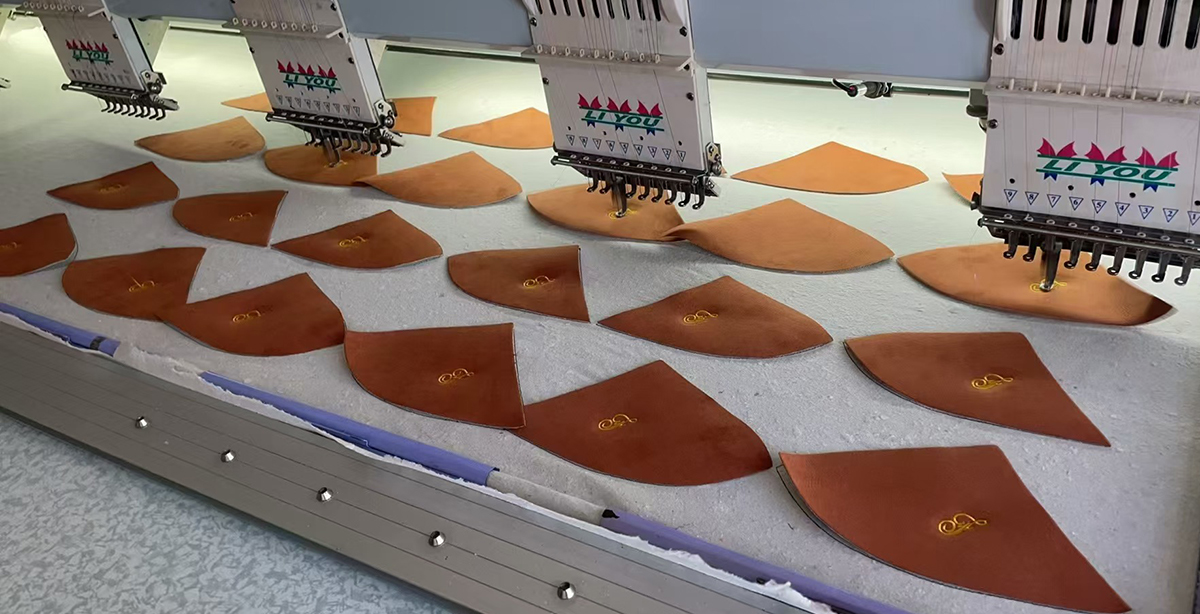
Our embroidery digitizing6 supplier runs custom digitized embroidery every week already, with a dedicated thread supplier who color matches7 to spec. It's a system that was already running before this product needed it — we didn't build it for one client.
Take any one of these away and 300 pairs stops being possible.
What "Small Batch" Actually Costs
300 pairs is the realistic floor for production-run pricing.
100 pairs is technically doable, but only as a true test batch.
| 100 pairs | 300 pairs | |
|---|---|---|
| Status | Trial batch only | Realistic production floor |
| Per-pair cost | Higher — tooling/setup cost doesn't spread out well at this size | Standard production-run pricing |
| Sampling time | 7–10 days (shoe) + ~5 days if custom embroidery | Same |
Color matching is where most of that extra embroidery time goes.
For brand-specific colorways, it's common to go through five or more rounds of swatches with the supplier — and it's not just a visual check.
We're also confirming the thread and backing hold up structurally once stitched into a shoe upper, not just on a flat sample.
Where This Product Shows Up
This started as a suite-amenity item for Dubai's 7-star hotels and European 5-star hotels — an embroidered monogram slipper handed to guests as part of a branded in-room set.
From there, European home and lifestyle brands picked up the same construction for retail, followed by demand from Japan and Korea.
This isn't an isolated pattern on our end.
According to the Personalized Gifts Market8, Europe is currently the largest region in the global personalized gifts market by size.
Monogram styling9 itself is trending toward a quieter, more refined look — away from loud branding and toward initials that read as personal rather than promotional.
Luxury hotels are leaning into the same shift.
A recent Forbes report on luxury hotel amenities10 points to velvet monogrammed slippers specifically showing up as checkout and turndown gifts at top properties, not just as functional in-room amenities.
The home brands ordering this construction from us now are following the same consumer shift the hotels already bet on.
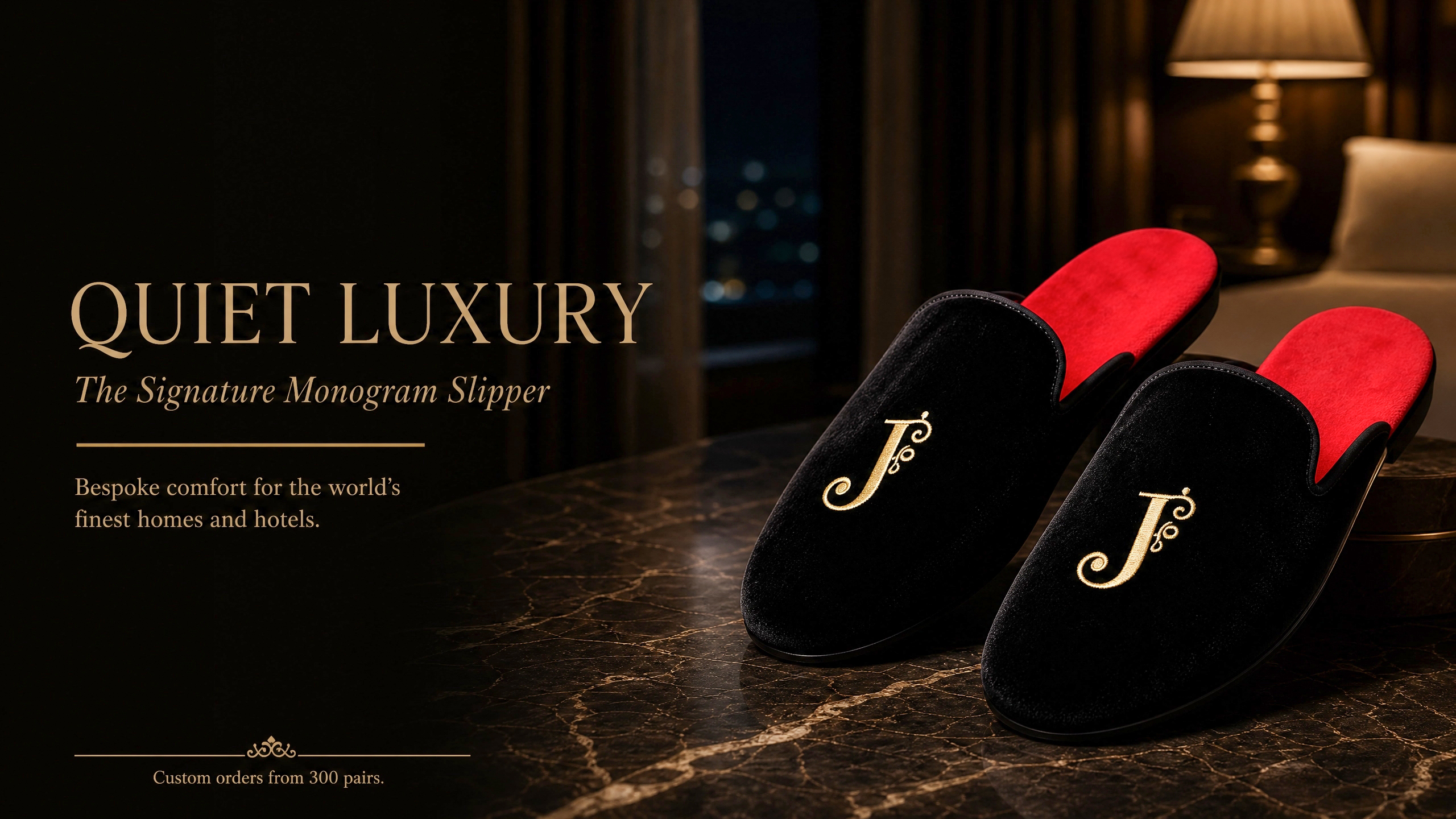
A 300-pair custom order isn't a workaround or a special favor we're doing once.
It's what our existing tooling, fabric network, and embroidery system were already built to handle — which is the difference between a supplier saying no and a supply chain manager saying yes.
Footnotes
-
Learn how luxury hotel amenity programs source customized products and why consistent quality and branding are important. ↩
-
Learn what a footwear last is and why every new shoe style typically requires its own last before production can begin. ↩
-
Understand the die-cutting process used in footwear manufacturing and why creating new cutting dies adds setup costs. ↩
-
This resource explains how tooling costs are distributed across production runs and why low-volume footwear orders are significantly more expensive.
-
MOQ (Minimum Order Quantity) explains why material suppliers often require minimum production volumes for custom fabrics. ↩
-
Embroidery digitizing converts artwork into machine-readable stitch files, making it an essential setup step before embroidery production. ↩
-
Thread color matching explains why multiple sampling rounds are often needed to achieve accurate brand colors while maintaining embroidery quality. ↩
-
The Personalized Gifts Market Report provides industry data showing the continued growth of personalized products and Europe's leading market position. ↩
-
This resource explains current monogram design trends and why luxury brands are moving toward understated personalization. ↩
-
Forbes discusses how luxury hotels are using premium personalized gifts, including monogrammed velvet slippers, to elevate guest experiences. ↩