I get this question in every initial consultation. Brand owners know they want custom shearling boots1, but the manufacturing process feels like a black box.
Creating your branded shearling boot line follows four clear stages: design selection and customization (2-3 weeks), sample development2 and revisions (3-4 weeks), production (4-6 weeks), and quality control3 with shipping (2-3 weeks). Total timeline from concept to delivered inventory runs 11-16 weeks.
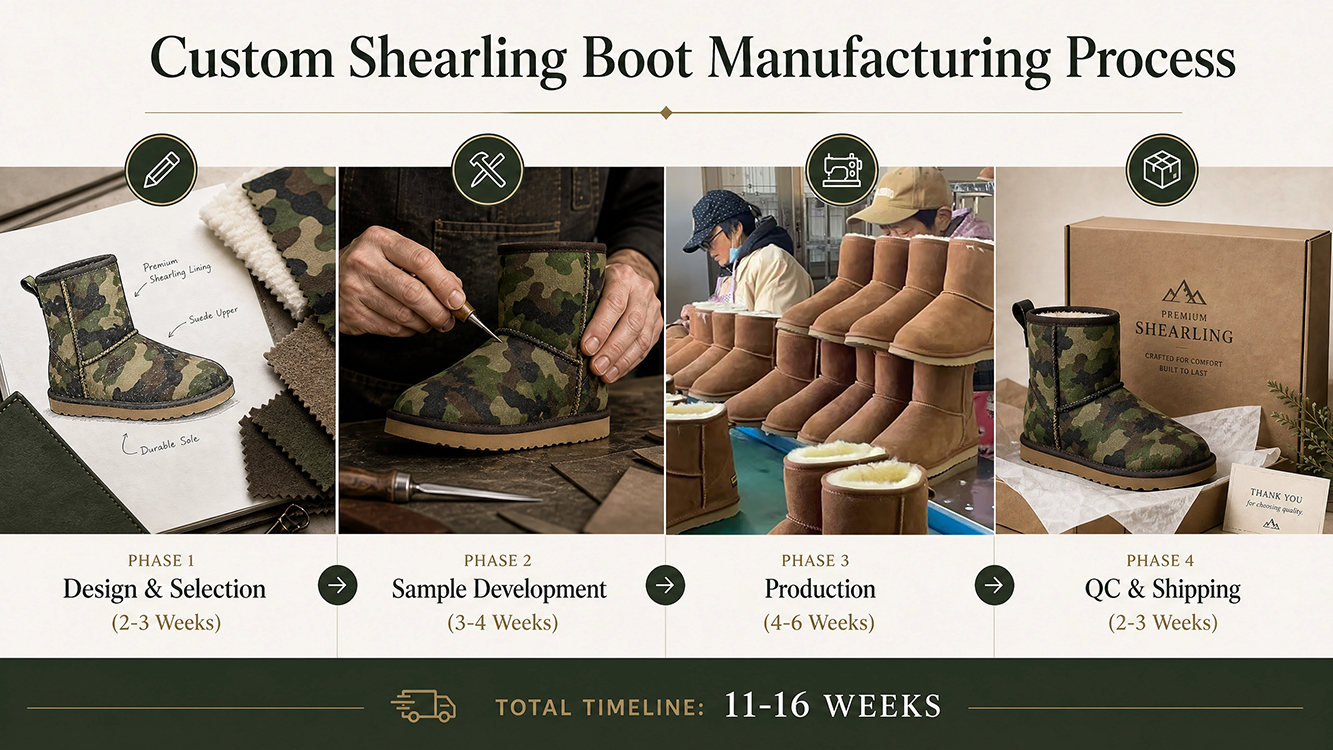
The process isn't mysterious once you understand each stage. Let me walk you through exactly what happens and what you need to prepare.
How does the custom manufacturing process actually work from start to finish?
Most new brands expect the process to be more complicated than it actually is. The framework stays consistent across manufacturers.
The process starts with selecting a base style and defining customizations, moves through sampling and approval, then proceeds through OEM footwear manufacturing4. Clear communication and documented approvals at each stage prevent costly mistakes and ensure you receive exactly what you envision.
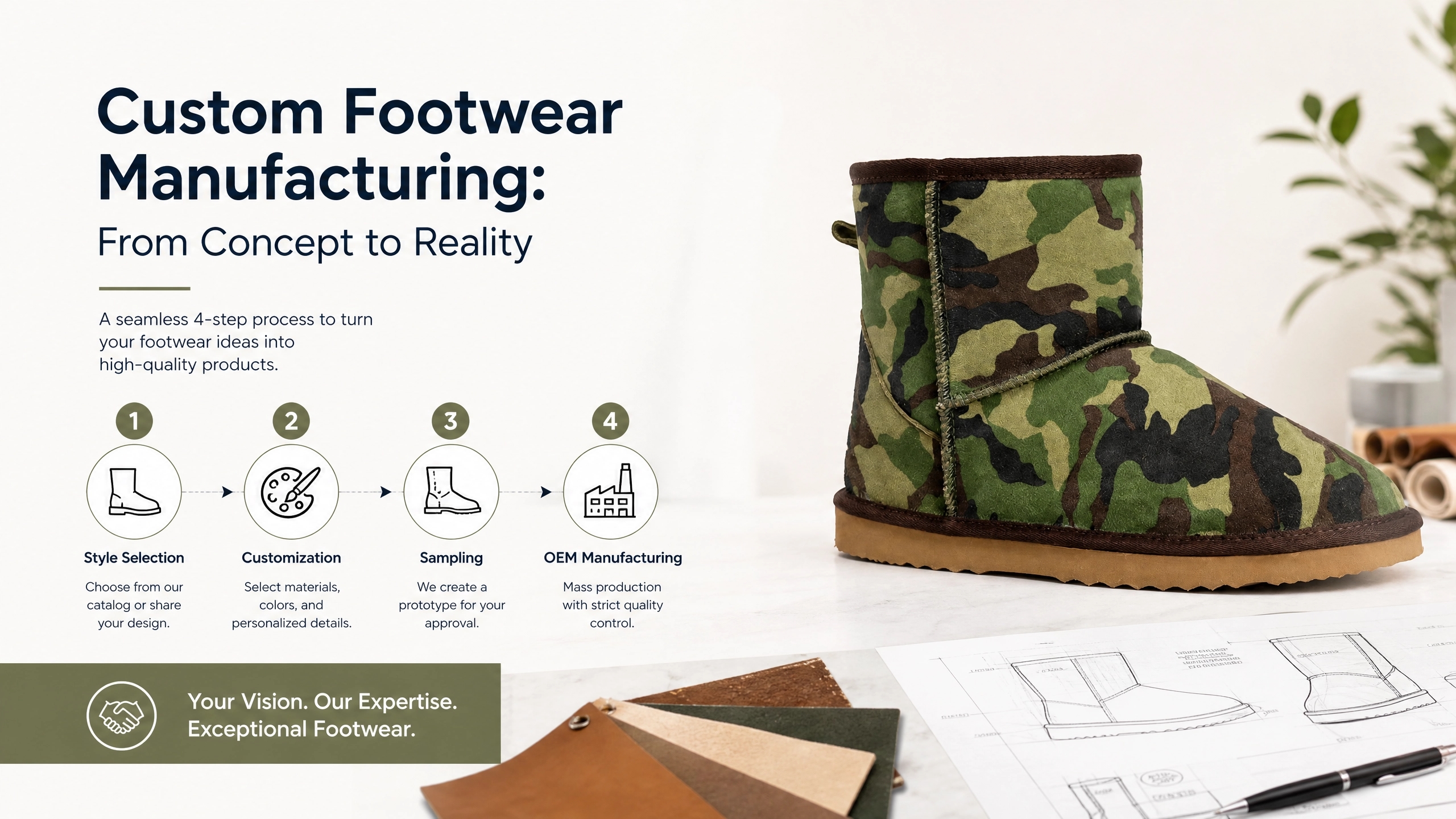
Stage 1: Design selection and specification (2-3 weeks)
Start with an existing factory style rather than creating a completely custom design. I recommend this for first-time brands because it reduces development time, lowers costs, and minimizes technical risks.
Review the factory's catalog thoroughly. Request photos from multiple angles and ask about materials, construction methods, and available size ranges. Most factories offer 10 base styles suitable for customization.
Define your customization specifications in detail:
| Specification | Details Needed |
|---|---|
| Materials | Sheepskin grade, suede type, sole material |
| Colors | Primary color, stitching color, accent colors |
| Branding | Logo placement, application method, hardware branding |
| Sizing | Size range, sizing system |
Request physical color samples, not screen colors. Screen colors never match actual materials accurately.
Stage 2: Sample development (3-4 weeks)
Sample development takes 15-20 days from specification approval. You'll receive detailed photos before the factory ships samples. Review these carefully and request additional angles if needed.
Physical sample evaluation matters most for fit testing. Have multiple people try samples in different sizes. Better to discover fit issues now than after producing 200 pairs.
Most brands need 1-2 revision rounds. Minor changes like logo sizing adjust quickly. Major construction modifications require additional fees and time.
Stage 3: Bulk production (4-6 weeks)
Production begins after you approve samples and pay your deposit. Timeline depends on order size:
| Order Size | Production Time |
|---|---|
| 100-150 pairs | 25-30 days |
| 150-250 pairs | 30-40 days |
| 250-500 pairs | 40-50 days |
Peak season (August-November) extends timelines by 1-2 weeks. Chinese New Year5 (January-February) adds 2-3 weeks. Plan accordingly.
Request mid-production photos after 50% completion. This lets you spot issues before the entire order finishes.
Stage 4: Quality control and shipping (2-3 weeks)
Pre-shipment inspection verifies color consistency, logo quality, construction standards, correct size distribution, and packaging specifications. Most factories allow a 2-3% defect rate.
Sea freight6 takes 25-35 days to the US West Coast. Air freight7 takes 7-10 days but costs 2-3x more. I recommend sea freight for initial orders unless you face urgent deadlines.
Which base styles work best for different target markets?
Base style selection determines your brand positioning more than most brands realize.
Mini boots work best for fashion-forward younger demographics and warmer climates. Mid-calf boots appeal to broader age ranges and colder climates. Tall boots target premium positioning and the coldest weather markets.
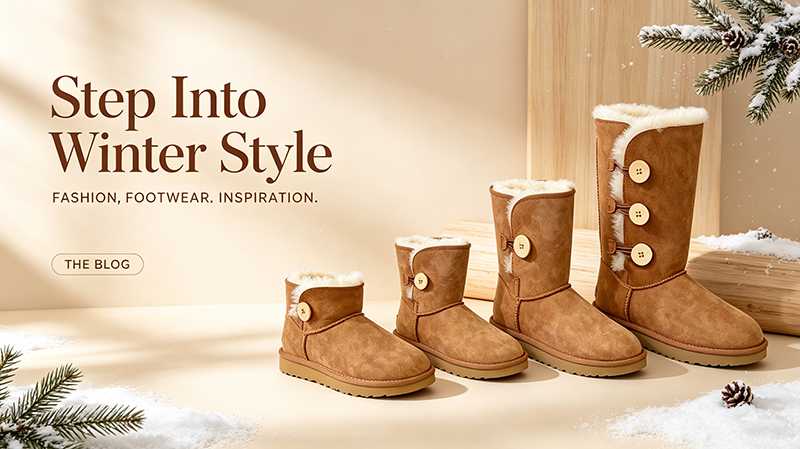
Mini boots for accessibility
Mini boots (ankle height) suit fashion-focused brands targeting customers aged 18-35 who prioritize style. These work brilliantly in mild winter climates like California or Texas.
Mid-calf boots as sweet spot
Mid-calf boots (6-8 inches) balance warmth, style, and versatility while appealing to ages 25-50. This height works everywhere from mild to harsh winter climates.
What information do manufacturers need from you to start?
Clear specifications prevent misunderstandings and revisions that waste time and money.
Manufacturers need your logo files in vector format8, target quantities, preferred timeline, budget range, specific customization requirements, and shipping destination. Providing complete information upfront accelerates the quotation process.
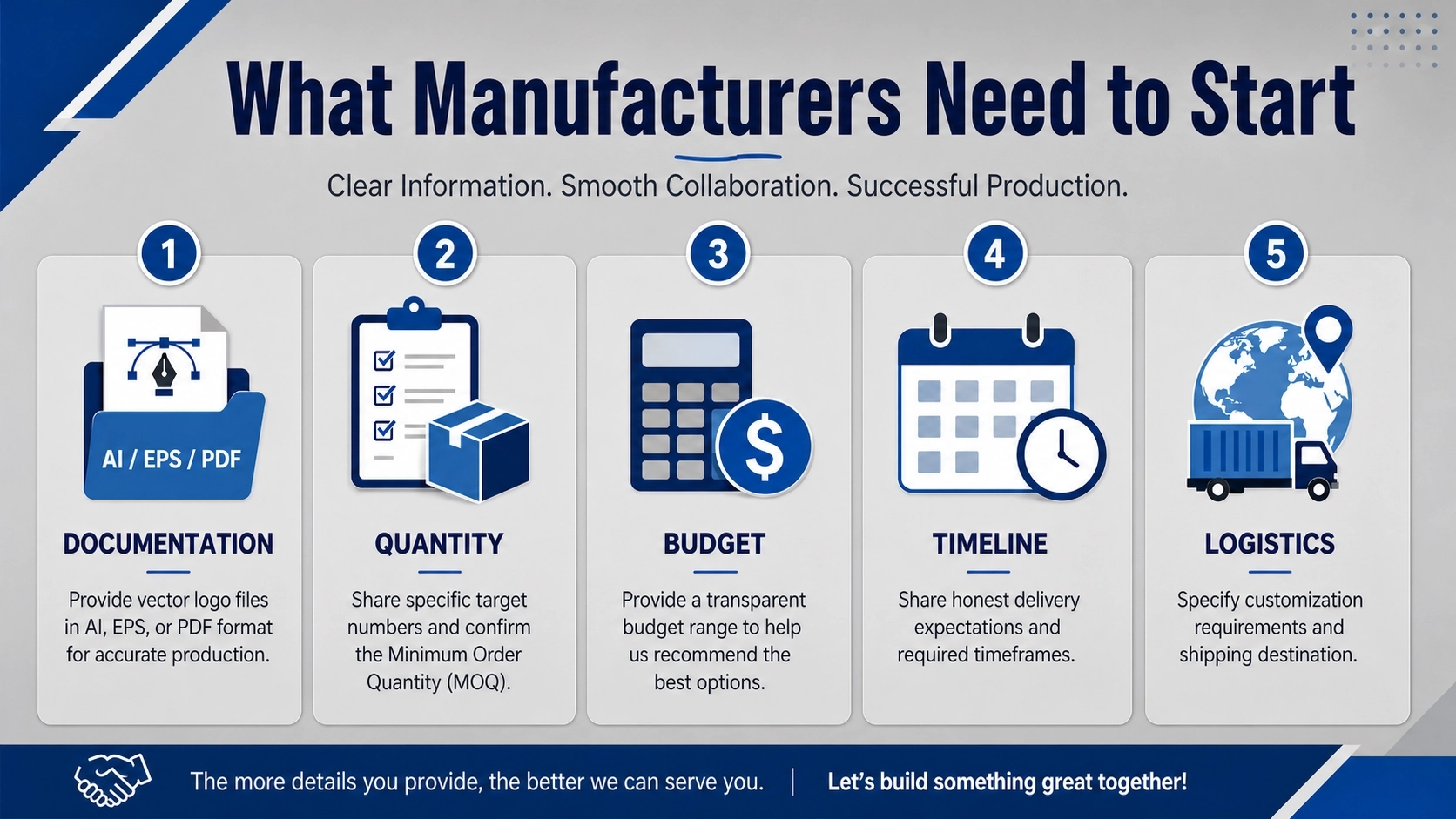
Essential documentation
Provide logo files in vector format (AI, EPS, or PDF). PNG files with transparent backgrounds work as backup but limit flexibility.
Specification clarity
Be specific with target quantities. "100-200 pairs" signals different commitment than vague exploration. Understanding a factory's MOQ9 also helps set realistic expectations.
Budget transparency helps factories recommend appropriate options. "We have $15,000 total budget" produces better recommendations than vague requests.
Timeline expectations need honesty. If you need inventory by November, communicate this in May, not August.
What communication mistakes should you avoid?
Poor communication causes most manufacturing problems.
The biggest pitfalls include vague specifications, changing requirements mid-production, expecting instant responses across time zones, and failing to document approvals in writing.
Avoid color descriptions like "tan" that mean different things to everyone. Always request and approve physical color samples.
Never change specifications after sample approval. The factory already ordered materials and scheduled production.
Remember China operates 12-16 hours ahead of US time zones. Schedule video calls respecting both time zones.
Always confirm important decisions via email with clear documentation: "Approved: Sample #3 with chestnut color and embossed logo10 as shown in attached photos."
Conclusion
Creating your branded shearling boot line follows a predictable four-stage process taking 11-16 weeks total. Success comes from clear specifications, realistic timelines, professional communication, and proper documentation at each stage. The process is straightforward once you understand the framework and prepare the necessary information upfront.
Footnote
-
Learn what custom shearling boots are, how they are manufactured, and how private-label customization differs from buying ready-made products. ↩
-
Understand the footwear sample development process, including prototyping, revisions, approval, and production readiness. ↩
-
Learn what footwear quality control inspections cover before shipment and how they reduce manufacturing defects. ↩
-
Understand how OEM footwear manufacturing works, from product development through mass production for private-label brands. ↩
-
Learn how Chinese New Year affects factory production schedules and why early planning helps avoid shipping delays. ↩
-
Understand typical sea freight transit times from China and how to plan shipping schedules for bulk footwear orders. ↩
-
Compare air freight and sea freight, including shipping costs, delivery speed, and when each shipping method makes sense. ↩
-
Discover why manufacturers require vector logo files (AI, EPS, PDF) for accurate branding, printing, embossing, and mold production. ↩
-
Learn what Minimum Order Quantity (MOQ) means, why factories use it, and how it affects pricing and production planning.
-
Learn how embossed logos are applied to footwear, their advantages, and the design considerations involved. ↩