
Many buyers struggle with missed details, slow replies, and poor production control. I have seen how one small mistake can delay a whole season.
Custom leather slipper manufacturing starts with clear design goals, material selection, sampling, production planning, quality checks, and delivery management. I find that strong supplier coordination and clear communication help brands reduce delays, control quality, and launch products faster.
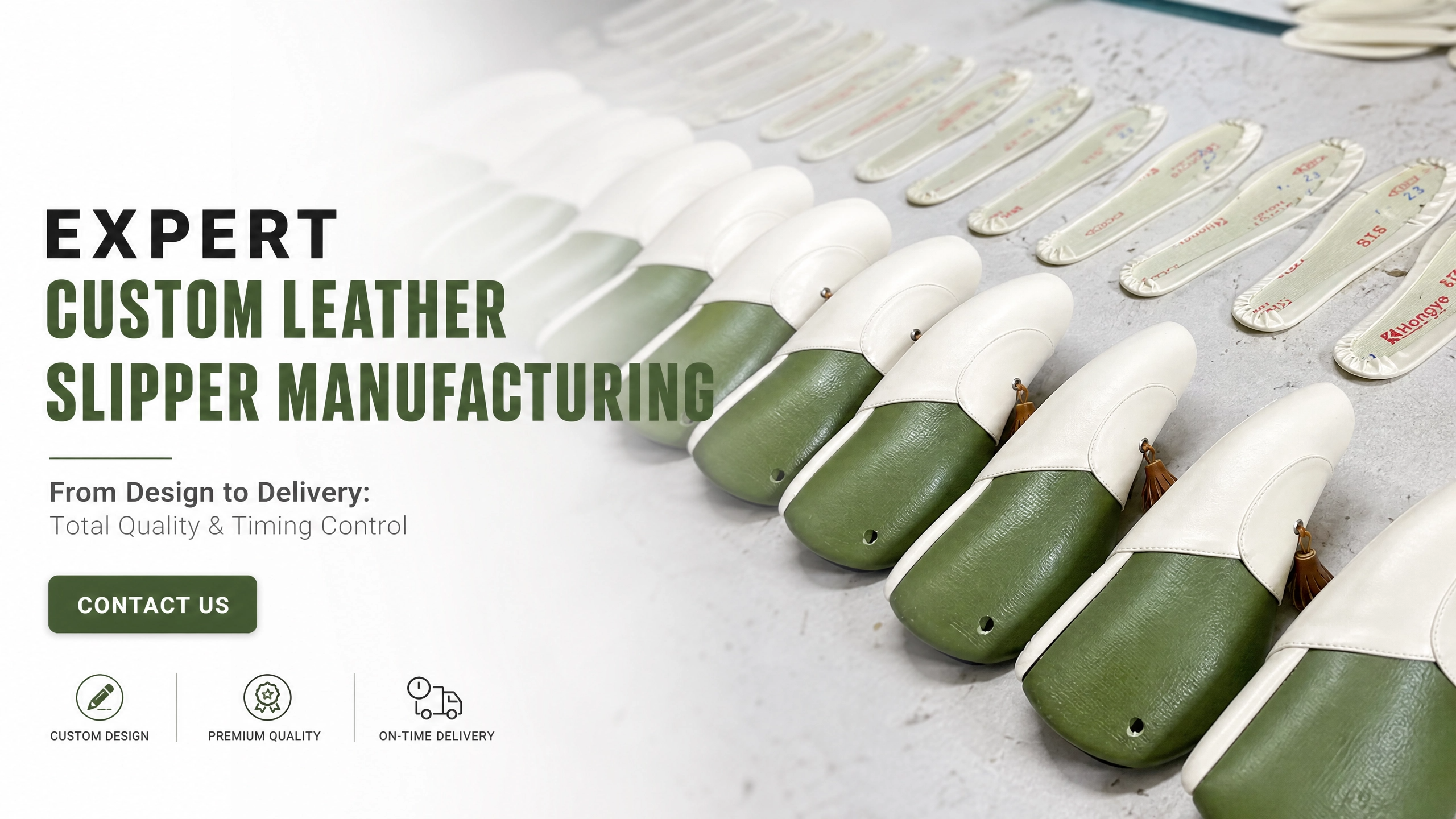
I have worked with buyers who care about fashion, comfort, cost, and delivery at the same time. I also know that slipper production is not only about making a product. It is about turning an idea into a product people want to wear. I often see buyers ask the same question: how can I make custom slippers without losing control over quality, timing, and cost? I think the answer starts with understanding the full process from design to delivery.
How Do I Turn a Leather Slipper Idea into a Real Product?
A great idea can fail when suppliers misunderstand details or miss deadlines. I have seen brands lose time because product requirements were not clear enough.
I start with clear product goals, sketches, material needs, sizing plans1, branding details, and target costs. I find that detailed preparation makes sampling faster and reduces production mistakes later.
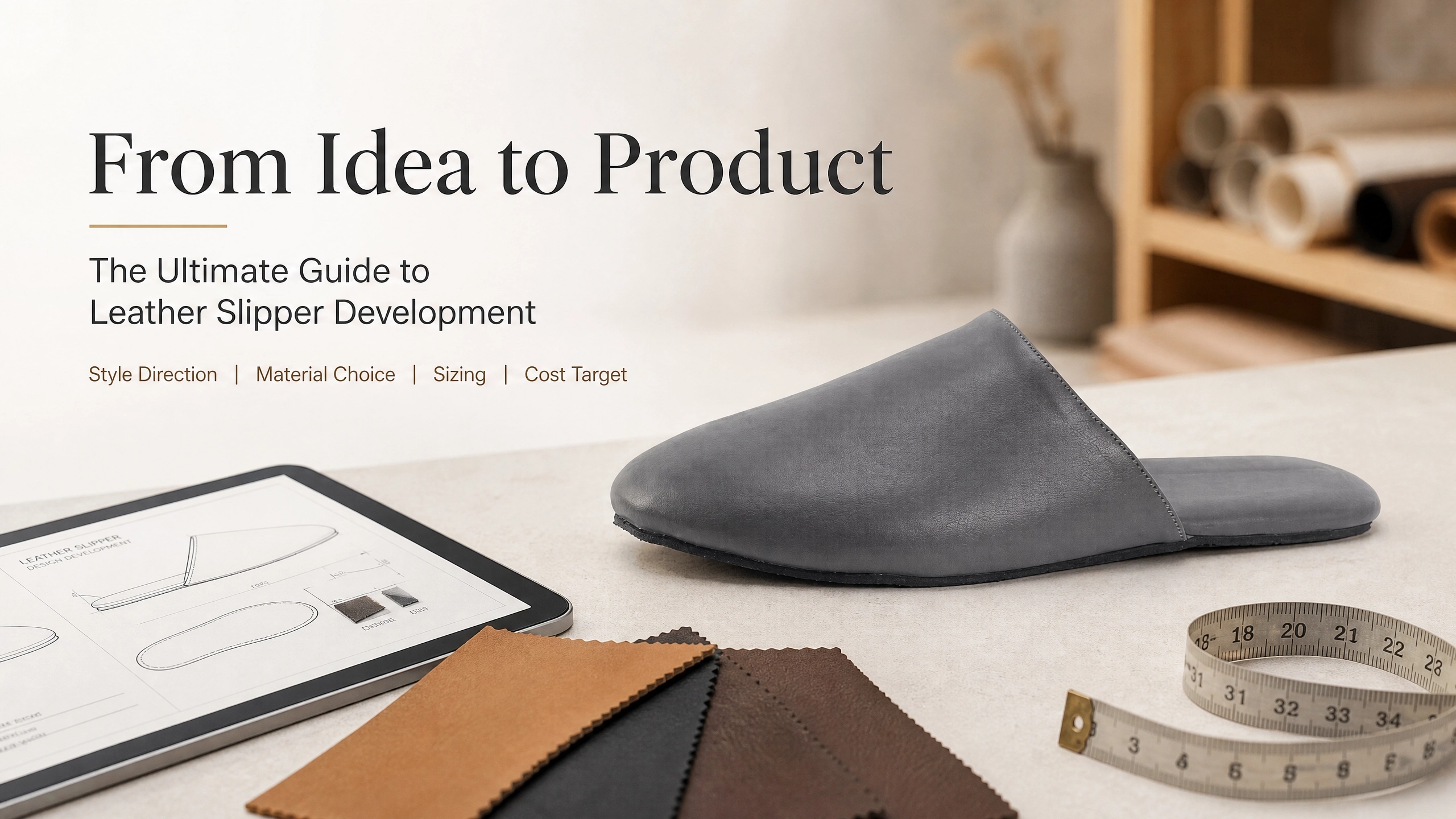
When I work on a custom leather slipper project, I first focus on the product direction. I ask myself simple questions. Who will wear this slipper? Is the style for indoor comfort, fashion, gifting, or premium retail? I think these questions shape every next step.
I usually break product planning into smaller parts because too many brands focus only on appearance. I find that comfort, cost, and production limits matter just as much.
| Manufacturing Stage | What I Focus On |
|---|---|
| Style Direction | Trend, comfort, customer type |
| Material Choice | Leather type, lining, outsole |
| Branding | Logo, label, packaging |
| Sizing | Market fit and measurement |
| Cost Target | Wholesale price planning |
I have worked with buyers who bring complete design files. I have also worked with buyers who only share a rough idea from social media or market trends. In both cases, I believe early organization matters most. A clear tech pack2, color list, logo placement, and measurement guide reduce confusion later.
I also think communication matters more than people expect. I often repeat details during development because production teams and buyers sometimes understand the same thing in different ways. A simple confirmation can prevent costly mistakes.
How Do I Choose the Right Leather and Materials for Slippers?
Many slipper projects fail because brands choose materials based only on appearance. I have seen soft leather crack, fade, or lose shape after use.
I choose leather and supporting materials based on comfort, durability, target price, sustainability needs, and market preference. I think the right material mix helps both product quality and long-term sales.
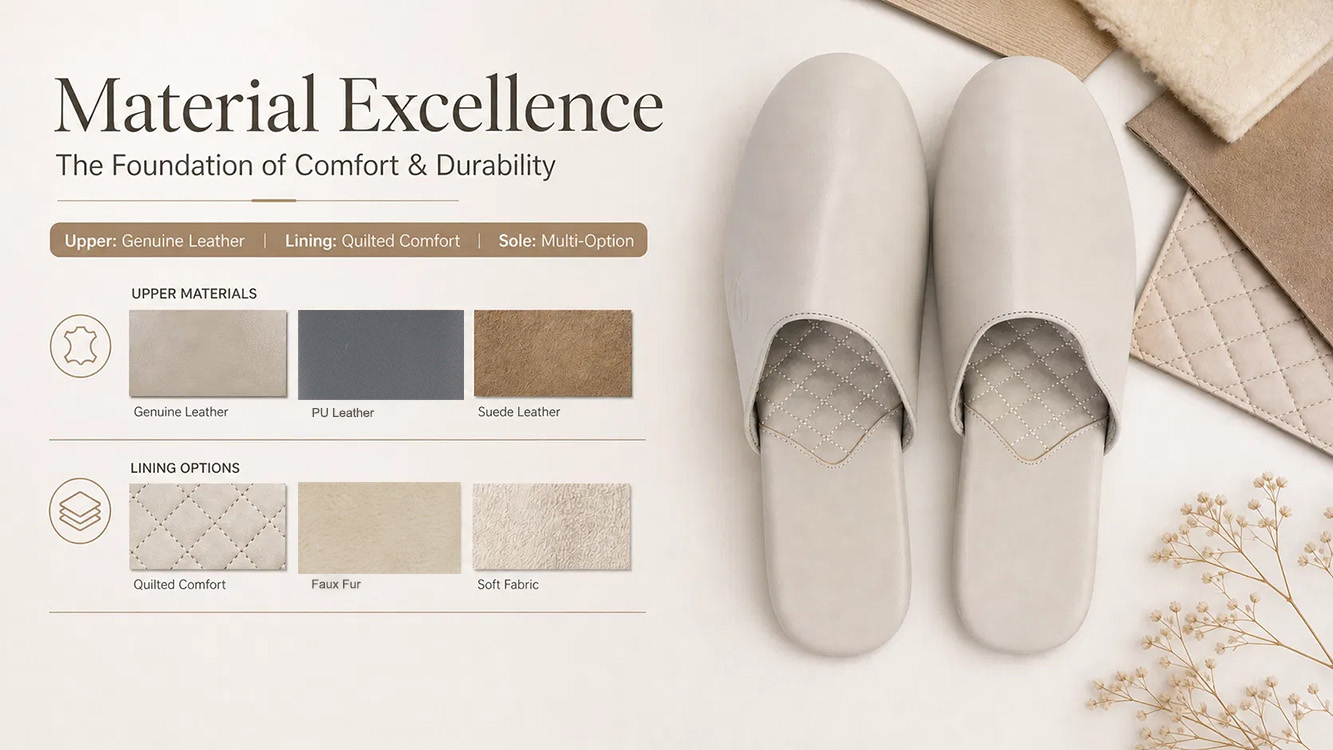
I think material choice shapes customer experience more than almost anything else. A leather slipper may look beautiful online, yet feel uncomfortable after one week of use. I have learned that material decisions should match the product goal.
For premium products, I often see brands prefer genuine leather3 with soft lining materials. For trend products, I sometimes recommend mixed materials to balance appearance and cost.
| Material Part | Common Options | Why I Consider It |
|---|---|---|
| Upper | Genuine leather, suede4 | Look and durability |
| Lining | Wool, faux fur, fabric | Comfort and warmth |
| Sole | Rubber, EVA5, TPR6 | Grip and flexibility |
| Branding | Embossed logo, woven label | Brand identity |
I also notice growing demand for eco-friendly options. Some buyers want renewable materials7 or tested materials that meet compliance standards8. I think this is especially important for fashion brands and retailers selling in Europe, the USA, and Australia.
In my experience, material testing9 matters too. I like working with factories that understand compliance requirements because this reduces risks later. I prefer to solve problems before production instead of after delivery.
How Does Sampling10 Help Avoid Manufacturing Problems?
Many buyers rush into bulk production too fast. I have seen brands spend thousands fixing mistakes that a sample could have prevented.
I use sampling to check comfort, stitching, sizing, material feel, logo placement, and construction quality before production. I find that samples reduce risk and improve communication.
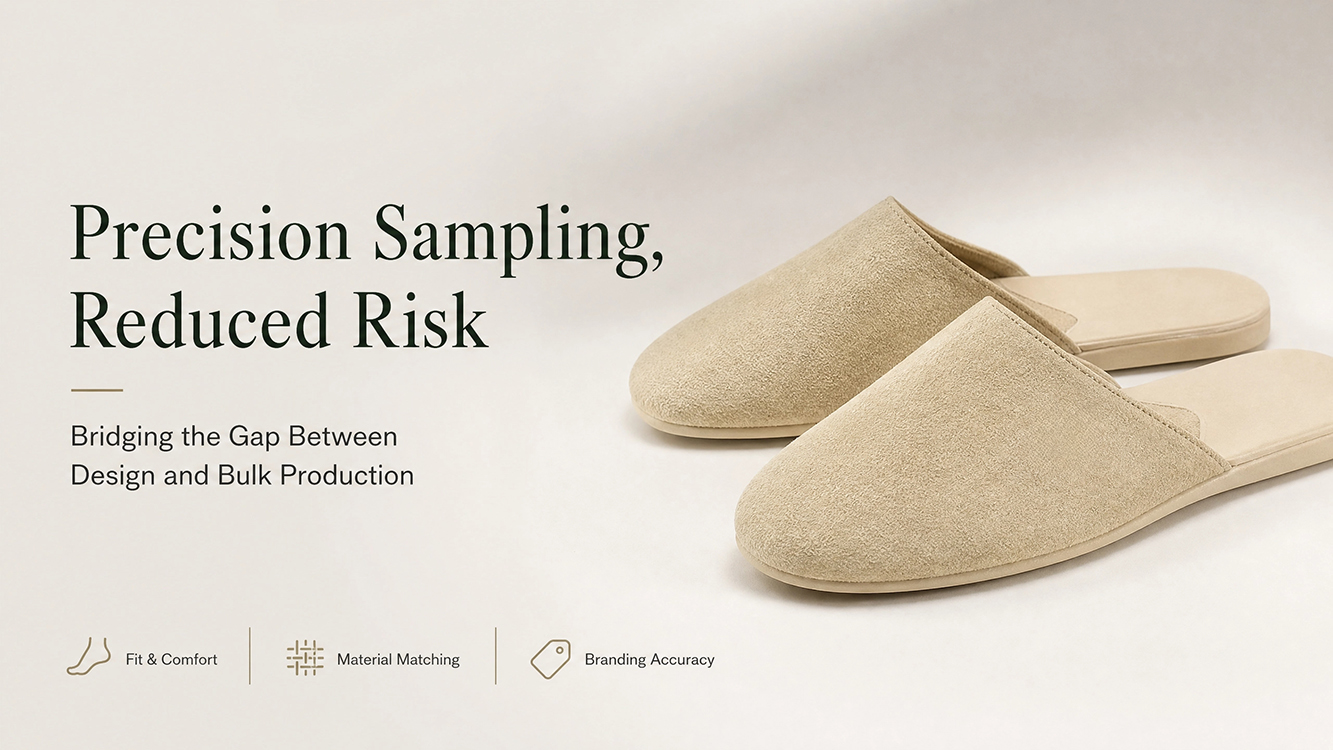
I always treat the sample stage seriously because this is where ideas become real products. I often remind buyers that photos alone are not enough. A slipper may look perfect in an image but feel uncomfortable in real use.
I usually divide sampling into several checkpoints.
| Sample Checkpoint | What I Review |
|---|---|
| Shape | Toe, opening, structure |
| Comfort | Softness, flexibility |
| Branding | Logo placement and finish |
| Material Match | Color and texture |
| Fit | Size accuracy |
I have worked with fashion buyers who request many colors and many small product changes. I think this stage becomes even more important for brands with large SKU counts11. A tiny change in stitching, material thickness, or embroidery can affect production later.
I also think repeated confirmation helps. Sometimes teams misunderstand design details, especially in fast-moving projects. I often review photos, videos, measurements, and comments again because I want fewer surprises during production.
Good sampling does not slow production. In my experience, it actually saves time because problems become easier to fix before factories start large-scale manufacturing.
How Do I Manage Production and Quality Before Delivery?
Late shipments and quality problems hurt brand trust. I have seen buyers struggle when factories stop communicating or skip inspections.
I manage production with factory coordination, timeline tracking, material checks, in-line inspections12, and final inspections13. I believe organized follow-up helps products ship on time.
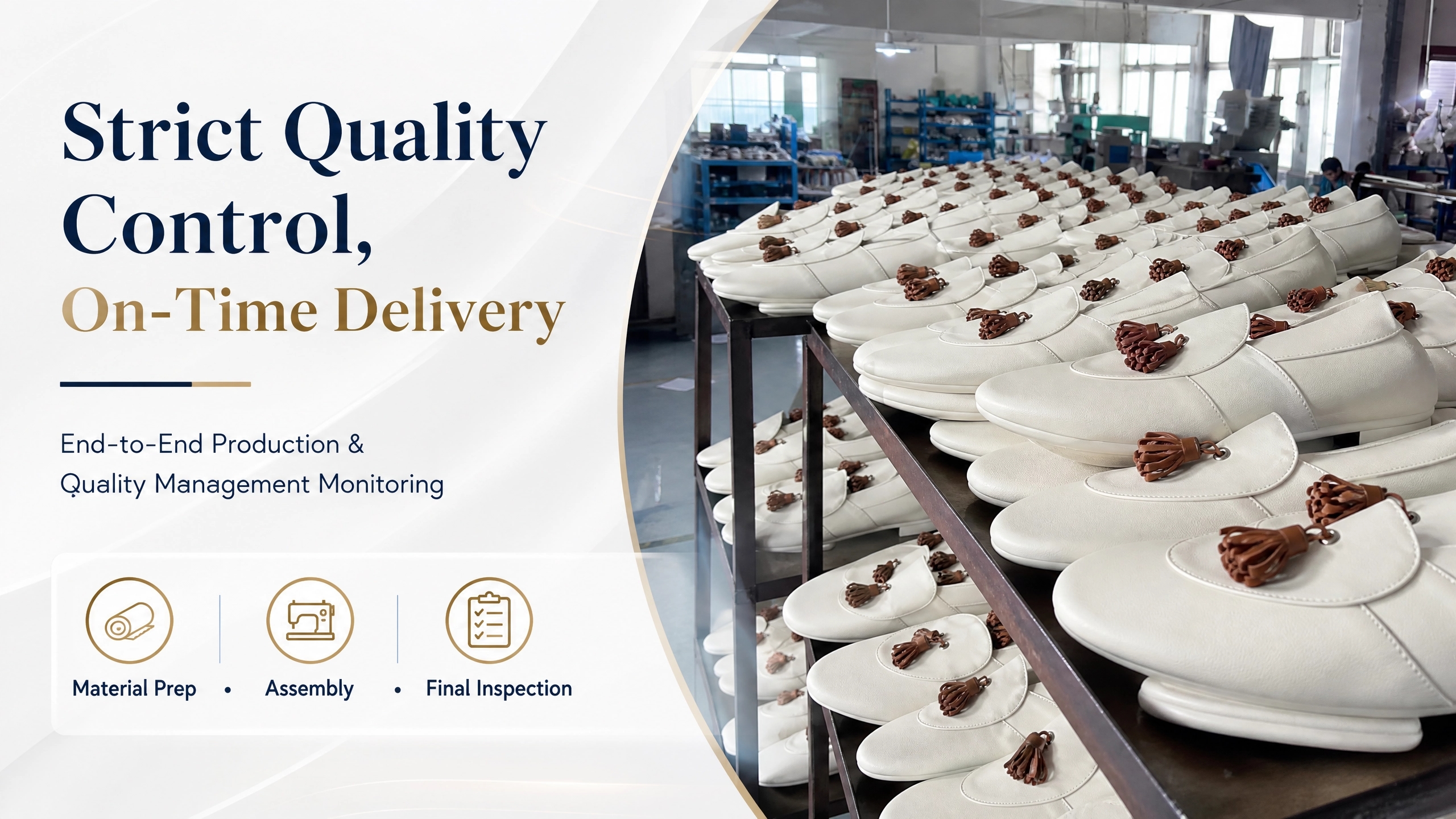
I think production management matters as much as design. A good slipper idea still fails if delivery timing breaks. I often work with different factories because not every factory suits every order size or product type.
I usually divide production into clear stages so I can track progress better.
| Production Step | Why I Track It |
|---|---|
| Material Preparation | Prevent shortages |
| Cutting & Sewing | Confirm accuracy |
| Assembly | Check comfort and finish |
| Inspection | Reduce defect rate |
| Packing | Avoid shipping errors |
I have seen brands struggle with poor organization, especially when product details become complex. Some buyers manage many colors, sizes, packaging requests, and logo changes at the same time. I think strong coordination becomes critical here.
I also believe factory relationships matter. Long-term factory partners often understand quality expectations faster. This helps reduce mistakes and improve speed.
Before delivery, I like final inspections because I want products to match approved samples. I also think logistics planning14 should happen early. Delays at the shipping stage often happen when paperwork or packaging details are ignored.
Conclusion
I believe custom leather slipper manufacturing becomes easier when design, material choice, sampling, production, and delivery work together from the start.
-
Readers can understand sizing standards across markets and reduce fitting or measurement errors in production. ↩
-
Readers can learn what a tech pack is and why it helps reduce misunderstandings during product development and manufacturing. ↩
-
Readers can understand different leather options, durability, and quality differences before selecting materials. ↩
-
Readers can learn how suede behaves in footwear products, including durability, texture, and care requirements. ↩
-
Readers can understand why EVA is commonly used for slipper soles, including comfort, flexibility, and weight advantages. ↩
-
Readers can understand the role of TPR in footwear production and how it affects grip, durability, and flexibility. ↩
-
Readers can explore eco-friendly and renewable material options that support sustainability goals in footwear manufacturing. ↩
-
Readers can understand product testing and compliance requirements that help reduce risks in export markets. ↩
-
Readers can understand how footwear materials are tested for durability, safety, and performance before mass production. ↩
-
Readers can understand why sampling is critical to avoid manufacturing mistakes and improve production accuracy. ↩
-
Readers can understand what SKU means and why managing many product variations affects production complexity. ↩
-
Readers can understand how in-line inspections help reduce production defects before final shipment. ↩
-
Readers can understand why final inspections matter for quality consistency and shipment approval. ↩
-
Readers can understand how logistics planning reduces shipping delays and delivery risks.