Struggling to find reliable suppliers1 for your custom footwear brand? You’re not alone—and that’s where we come in.
We help fashion brands, trendy startups, and traditional distributors create standout custom slippers2 by offering low MOQs, flexible customization, and seamless production management.
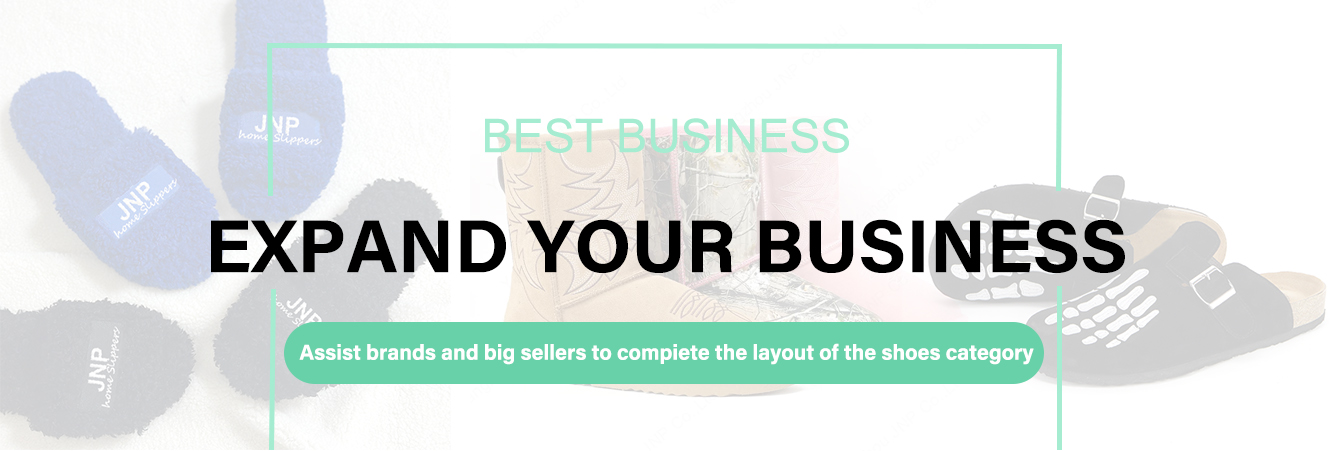
Whether it’s a fashion-forward brand or a wool-loving traditionalist, our collaborations show how customization3, adaptability, and trust create lasting success.
How did we help a luxury designer brand succeed?
High fashion demands high expectations—and high complexity. Amelie, a U.S.-based designer with a background at LV and Hermès4, came to us with high SKUs, intricate styles, and a chaotic procurement team.
We helped Amelie’s brand succeed by organizing production, managing detailed customization, and ensuring on-time delivery, despite complex product needs.

Deep Dive: How did we simplify complexity for a designer brand?
This client sourced from top-tier suppliers5 and demanded perfection. Their team struggled with coordination, and every detail had to be triple-checked. We became more than a supplier—we became a system.
Here's how we managed it:
| Challenge | Our Solution |
|---|---|
| Complex customization | Detailed spec sheets and visual approvals |
| Disorganized procurement | Centralized communication with a single account manager |
| High SKU and style variety | Batch organization by category and production schedule |
| Quality assurance | Factory audits6 and eco-material certifications |
We didn’t just manufacture slippers—we added structure to a disorganized process and helped them scale with style.
How did we support a trendy online startup with small orders?
Most suppliers turn away small MOQs7. Not us. Rural, a U.S. online brand targeting Gen Z, needed trendy slippers with fast turnarounds and custom logos—but only in small batches.
We offered flexible low-MOQ custom production and fast support that helped them test designs and win with trends.

Deep Dive: How did we match Gen Z speed with production?
Young audiences move fast. Trends8 come and go. For Rural, success meant keeping up. We used fast prototyping and responsive communication to support frequent new drops.
| Challenge | Our Solution |
|---|---|
| Small order quantities | Offered low-MOQ customization on trend-forward items |
| Fast-changing trends | Monthly design reviews and production slot reservations |
| Custom branding on each style | Digital logo mockups and pre-production samples |
| Balance production vs. sales risk | Flexible scheduling and partial advance commitments |
By keeping MOQ low and speed high, we made sure Rural could experiment, pivot, and grow fast without breaking the bank.
How did we help a traditional wool brand expand in a slow market?
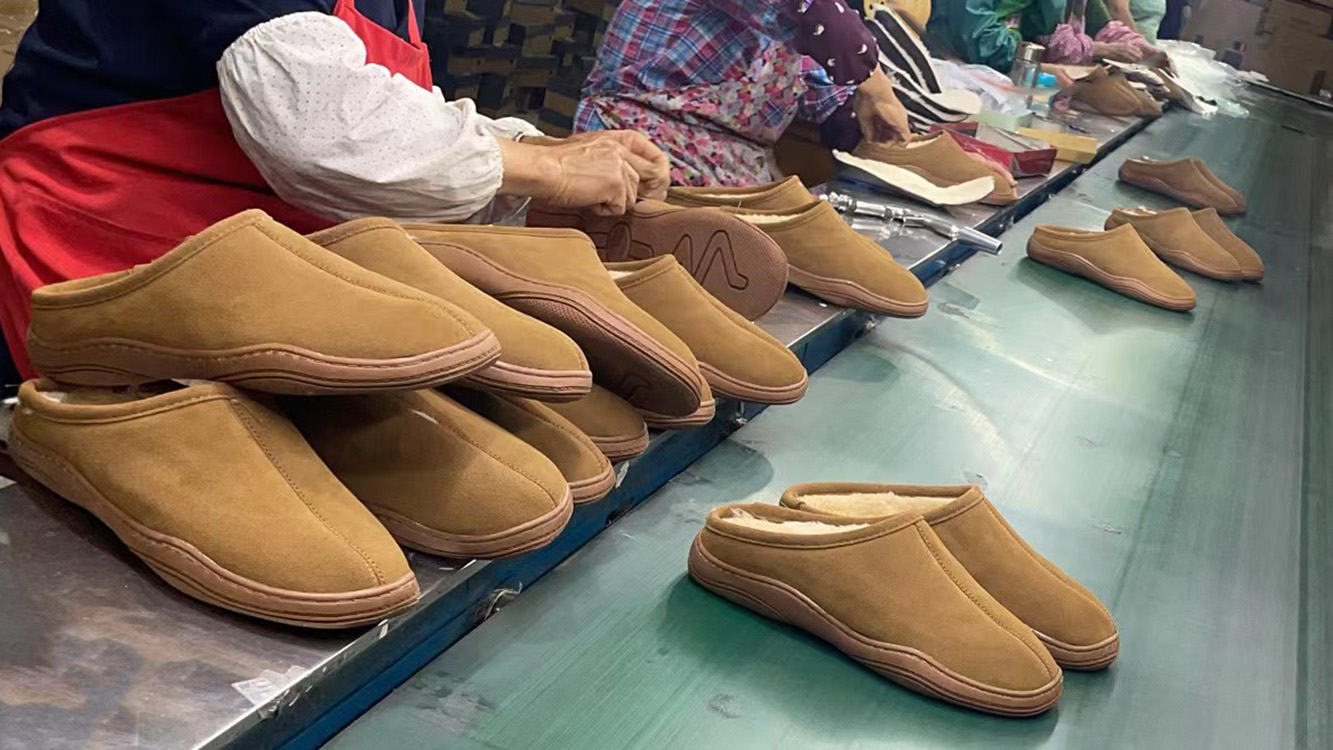
Andy, a veteran distributor9 in New Zealand, built his brand around wool slippers10. But rising costs and slower demand pushed him to look for new styles and pricing flexibility.
We delivered affordable off-season production, traditional craftsmanship, and trendy style extensions to help him stay competitive.
Deep Dive: How did we combine tradition with new trends?
Andy didn’t want to abandon wool. He just needed a new strategy. By keeping his core designs but adding new twists, we helped him stay relevant.
| Challenge | Our Solution |
|---|---|
| Rising costs | Off-season production to lower pricing |
| Stagnant designs | Added updated versions of traditional styles |
| Lower per-SKU quantities | Broadened SKUs with minimal quantity requirements |
| Need for smooth production | SOP guidance and regular QC check-ins |
We didn’t change Andy’s brand. We helped it evolve—slowly, steadily, and smartly.
Conclusion
From high-fashion complexity to small-batch agility and traditional reinvention—we make it all work through custom slippers built on trust, flexibility, and collaboration.
Footnotes
-
Reliable suppliers ensure consistent quality, communication, and delivery schedules—critical for scaling custom brands. ↩
-
Custom slippers let brands express their unique identity while adapting to market trends. ↩
-
Customization empowers brands to tailor products to their audience, boosting differentiation and loyalty. ↩
-
LV and Hermès are symbols of premium craftsmanship; sourcing at their level demands perfection. ↩
-
Top-tier suppliers offer high quality and compliance, key for premium and export markets. ↩
-
Factory audits verify working conditions, quality control systems, and ethical practices. ↩
-
MOQs (Minimum Order Quantities) define the smallest acceptable production run, often a barrier for small brands. ↩
-
Trends shift quickly, especially in fashion; brands must react fast to stay relevant. ↩
-
Distributors manage bulk buying and retail channels, influencing local product accessibility. ↩
-
Wool slippers are valued for warmth and natural material appeal, popular in cooler regions. ↩