
A fluffy appearance is not enough to make a great pair of slippers. I wanted to make something that feels just as comfortable after hours of wearing.
We improved the cushioning of our fuzzy slippers by adding a soft foam layer to the midsole. After repeated adjustments, we created a softer, plusher feel that makes every step more comfortable.
When I think about a good pair of indoor slippers, I always think beyond how they look. Soft materials and attractive designs can catch attention, but real comfort comes from the feeling under your feet. That is why we kept working on the midsole of these fuzzy slippers. We wanted to make the inside feel better, not just make the outside look softer. Adding foam was one of the important changes we made. But how did this small adjustment make such a difference? Let me share the story behind it.
Why Did We Decide to Improve the Cushioning of Our Fuzzy Slippers?
A pair of slippers can look soft but still feel hard underfoot. I believe customers should feel the comfort from the first step.
I wanted to improve the overall wearing experience. The upper was already fluffy, but I felt that the midsole could offer a softer feeling.
The outside appearance is only one part of a slipper. The part under the foot is just as important. When customers walk around the house, they can feel the difference between a simple flat sole and a well-cushioned midsole.
This was why I decided to focus on the inner construction.
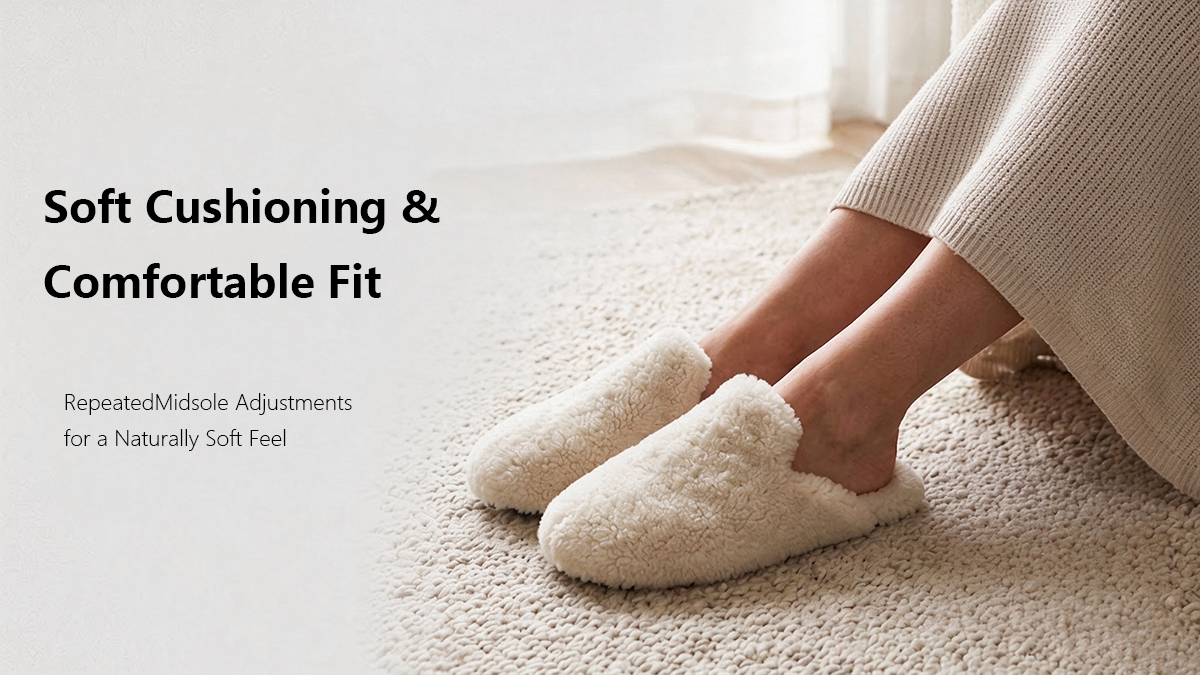
Comfort Is More Than Just a Fluffy Upper
When I develop fuzzy slippers, I pay attention to both appearance and wearing comfort.
A fluffy upper gives customers a warm and soft first impression. It makes the slippers look cozy and inviting. But the feeling under the feet also affects how much customers enjoy wearing them.
I wanted to create a more complete comfort experience.
Here are the main areas I considered during the improvement process:
| Product Part | What I Focused On | Why It Matters |
|---|---|---|
| Upper | Soft and fluffy material | Creates a cozy feeling |
| Insole | Comfortable foot contact | Makes the slippers pleasant to wear |
| Midsole | Added foam cushioning | Gives a softer underfoot feeling |
| Overall construction | Balanced thickness and comfort | Improves the wearing experience |
I did not want to make the slippers feel soft only when customers touched the upper. I wanted them to feel soft when customers actually wore them.
This is an important difference.
A customer may first notice the fluffy appearance in a product photo. But the real product experience starts when they put the slippers on. If the midsole feels too firm, the product may not meet their expectations.
That is why I started looking for ways to improve the cushioning without changing the cozy appearance that makes these slippers attractive.
I believe good product development should consider both what customers see and what they feel. A small improvement inside the slipper can make the whole product feel more complete.
How Did Adding Foam Make Our Midsole More Comfortable?
I knew that the midsole needed more attention. We decided to add a foam layer to improve the softness underfoot.
Adding foam sounds like a simple change. But the real goal was to find a better balance between softness, thickness, and the overall feel of the slippers.
The midsole became an important part of our product improvement process.
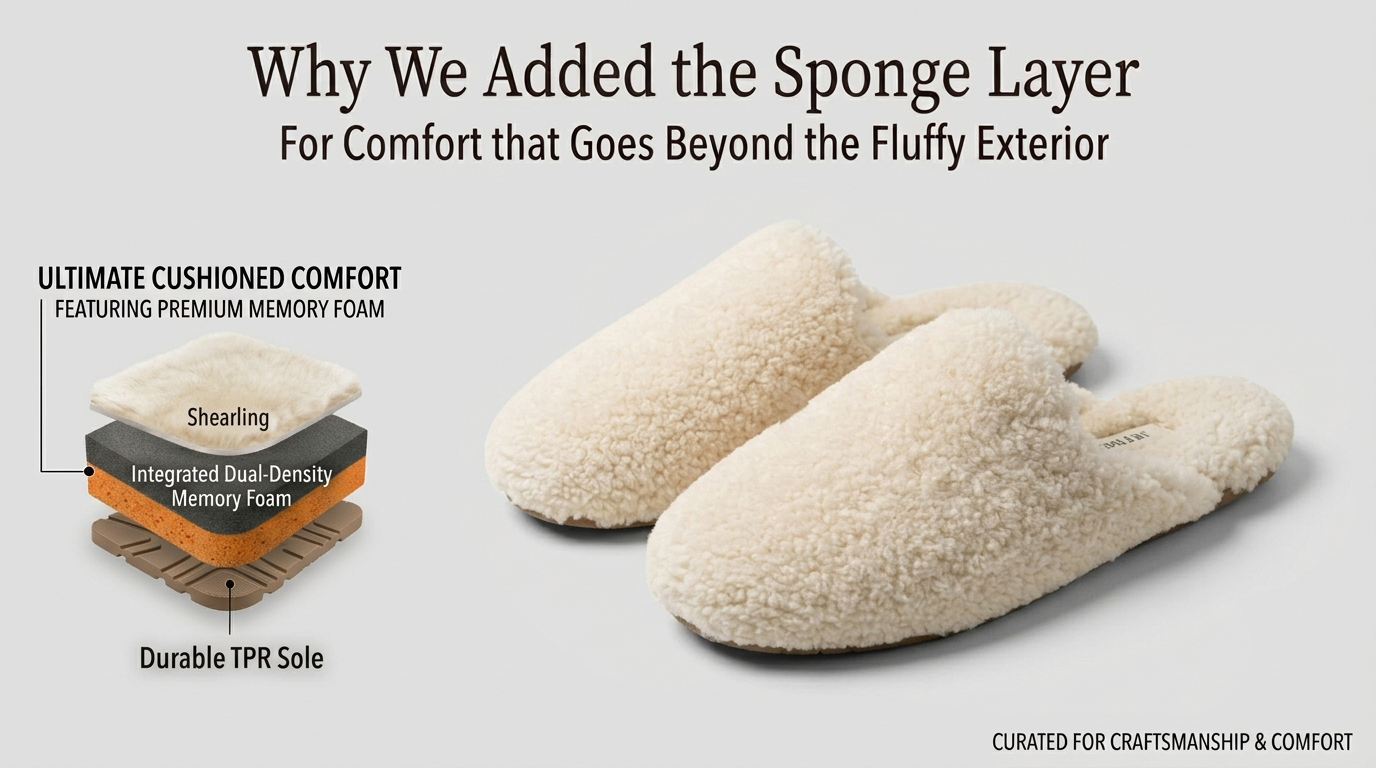
Understanding the Different Layers Inside the Slippers
When I look at the construction of these slippers, I do not see just one piece of material. I see different parts working together to create the final wearing experience.
The fluffy upper creates the soft appearance and cozy feeling. The insole provides the surface that touches the foot. The added foam gives the midsole an extra layer of cushioning.
Each part has its own purpose.
I wanted the foam to make the slippers feel softer without making the entire construction unnecessarily complicated.
The improvement was not only about adding another material. It was also about finding a suitable combination of materials.
The different layers of footwear construction1 each contribute to the overall structure and wearing experience.
Why Did We Choose to Add Foam?
Before the improvement, I felt that the midsole could be softer. I wanted customers to experience a more comfortable feeling when they stepped into the slippers.
Foam offered a practical way to improve this part of the construction.
In footwear, foam cushioning materials2 are commonly used to provide cushioning and influence how the sole responds to pressure.
Here is how I think about its role:
| Construction | Main Function | Wearing Experience |
|---|---|---|
| Fluffy upper | Covers the foot | Soft and cozy |
| Original insole | Supports the foot surface | Basic underfoot comfort |
| Added foam layer | Adds cushioning | Softer underfoot feeling |
| Combined construction | Brings the layers together | More comfortable overall experience |
The most important thing was the feeling after putting everything together.
I did not want to add foam just to make the product specification look better. I wanted the difference to be something customers could actually feel.
We kept adjusting the midsole construction until the result felt closer to what I had in mind.
The added foam made the midsole feel softer and more cushioned. It also gave us another way to improve the comfort level of our fuzzy slippers.
For me, this is what product development is about. I look at the details that customers may not notice at first. Then I work on making those details better.
A good product does not always need a completely new design. Sometimes, one thoughtful change inside the product can improve the whole experience.
How Do We Know If the Cushioning Feels Soft Enough?
I do not think we should judge cushioning by appearance alone. A thick-looking midsole does not always feel soft enough.
That is why I pay attention to the actual feeling when pressing the material and wearing the slippers.
The hand-press test gives us a simple way to feel how the cushioning responds.
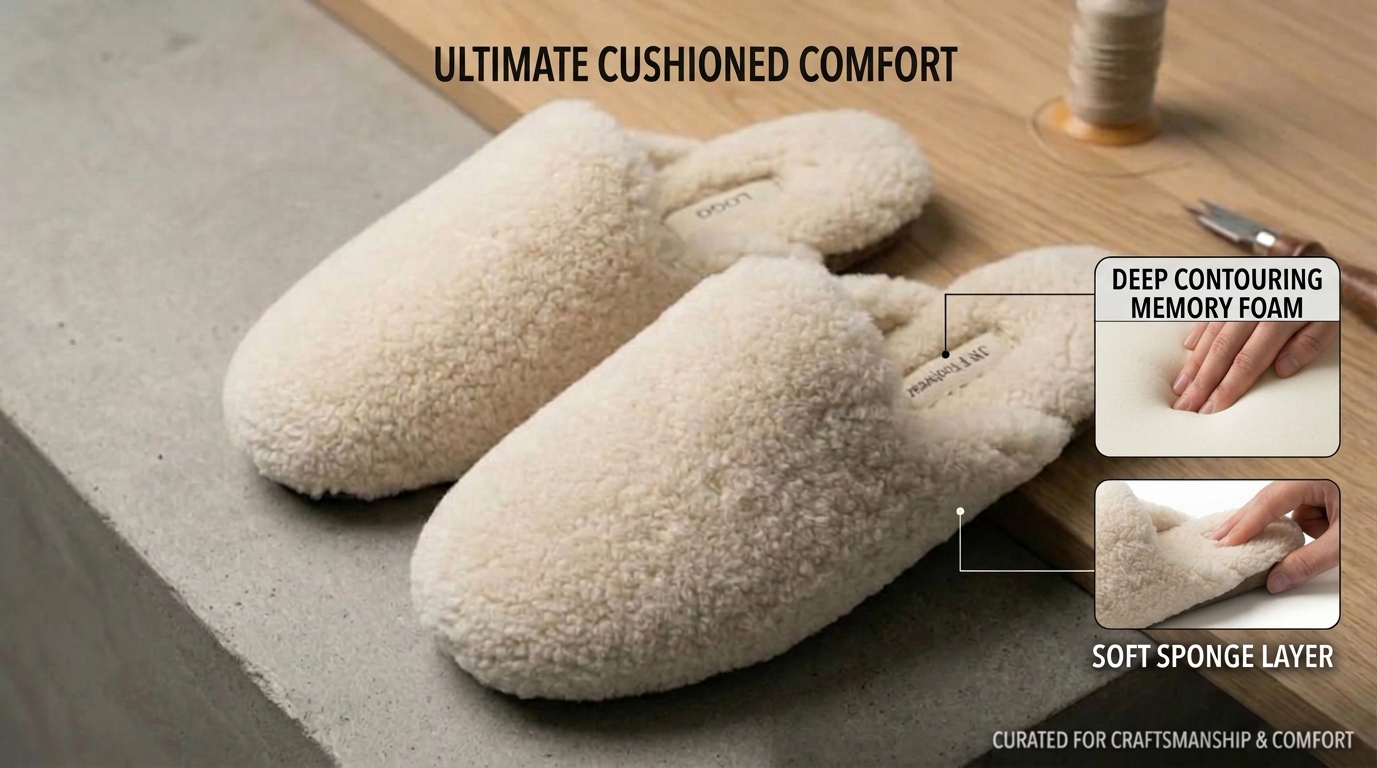
Testing the Softness by Hand
When I press the slipper with my hand, I can get a basic idea of how soft the construction feels.
The pressure helps me notice how the material responds. I can feel whether the cushioning gives way easily and whether the surface feels comfortable.
This is a simple step, but it helps me understand the product better.
I also pay attention to how the upper and midsole work together. The upper should keep its fluffy appearance, while the cushioning underneath should give the foot a softer feeling.
I do not want one part of the product to work against another.
Why Do We Keep Adjusting the Midsole?
I believe comfort is a combination of small details.
The foam layer is important, but the thickness and combination of materials also affect the final feeling. If I only focus on adding more foam, I may not get the balance I want.
The relationship between foam density and thickness3 is worth considering when selecting cushioning materials for footwear. Different material specifications can produce different cushioning characteristics.
That is why I look at the product as a whole.
Here are some of the details I consider:
- Softness: Does the midsole feel soft enough when pressed?
- Cushioning: Does the added foam create a more comfortable feeling underfoot?
- Thickness: Does the midsole work well with the overall slipper design?
- Appearance: Does the product keep its original fluffy and cozy look?
- Overall experience: Do the different materials work well together?
I also believe that hand pressing and actual wearing are two different ways to understand the product.
Pressing helps me feel the material response. Wearing helps me understand the comfort from the customer's point of view.
Both are useful during product development.
Actual footwear comfort evaluation through wear testing4 can provide additional insights into how a product feels during use, beyond what can be observed from its appearance.
I do not want to make a product that only looks impressive in photos. I want customers to enjoy wearing it at home.
That is why we kept making adjustments to the cushioning. We added foam, improved the midsole construction, and paid attention to the small details that affect comfort.
During development, footwear material testing5 can also help manufacturers evaluate material properties and product performance.
For me, every adjustment has a clear purpose: to make the slippers feel better when customers put them on.
Conclusion
Our fuzzy slippers became more comfortable through thoughtful midsole improvements. By adding foam and refining the cushioning, we made every step feel softer and cozier.
Footnotes
-
Footwear construction introduces the different components of footwear, including the upper, insole, midsole, and outsole, helping readers understand how each part contributes to the overall wearing experience. ↩
-
Foam cushioning materials explain how foam responds to pressure and provides cushioning, helping readers understand why adding foam can create a softer underfoot feeling. ↩
-
Foam density and thickness explain how these material characteristics influence cushioning performance, helping readers understand why selecting the right foam structure is important. ↩
-
Footwear comfort evaluation explains how footwear comfort can be evaluated through actual wearing experiences, giving readers a better understanding of why physical testing matters during product development. ↩
-
Footwear material testing introduces common footwear material testing methods and performance standards, helping readers understand how manufacturers can evaluate material quality and product performance. ↩