Yes—but only part of the category is becoming fashion footwear. In JNP's review of 20 public consumer comments across eight discussions, people repeatedly wanted slippers that looked presentable while still providing grip, support, breathability or durability.
This small sample is directional, not a measure of market share. It is useful because it shows which product tensions buyers should investigate.
At Yangzhou JNP Imp. & Exp. Co., Ltd., we see the commercial opportunity as comfort plus a clearer silhouette, stronger styling value and a defined use occasion. Fashion is being added to comfort; it is not replacing it.
Are Indoor Slippers Becoming Fashion Products in 2026?
Yes, some indoor slippers are moving into fashion-footwear territory, but the evidence supports a category shift—not a claim that every slipper is now a fashion product.
British Vogue identified slippers as an unexpected 2026 shoe trend1, highlighting leather, suede, jacquard and silky versions worn beyond the home. This is a fashion and merchandising signal, not proof of market-wide sales.
Broader footwear data supports the context. Circana reported2 that mules, clogs and ballerinas contributed positively in the first quarter of 2026. The AlixPartners–FDRA Spring 2026 survey3 found that more than nine in ten U.S. consumers planned to buy casual footwear and that versatility was changing how shoppers defined the category.
Neither source measures indoor slippers separately. JNP's conclusion is that these are repeated category signals, not proof of demand for every slipper direction.
What Is the Difference Between a Comfort Slipper, a House Shoe and a Slipper Shoe?
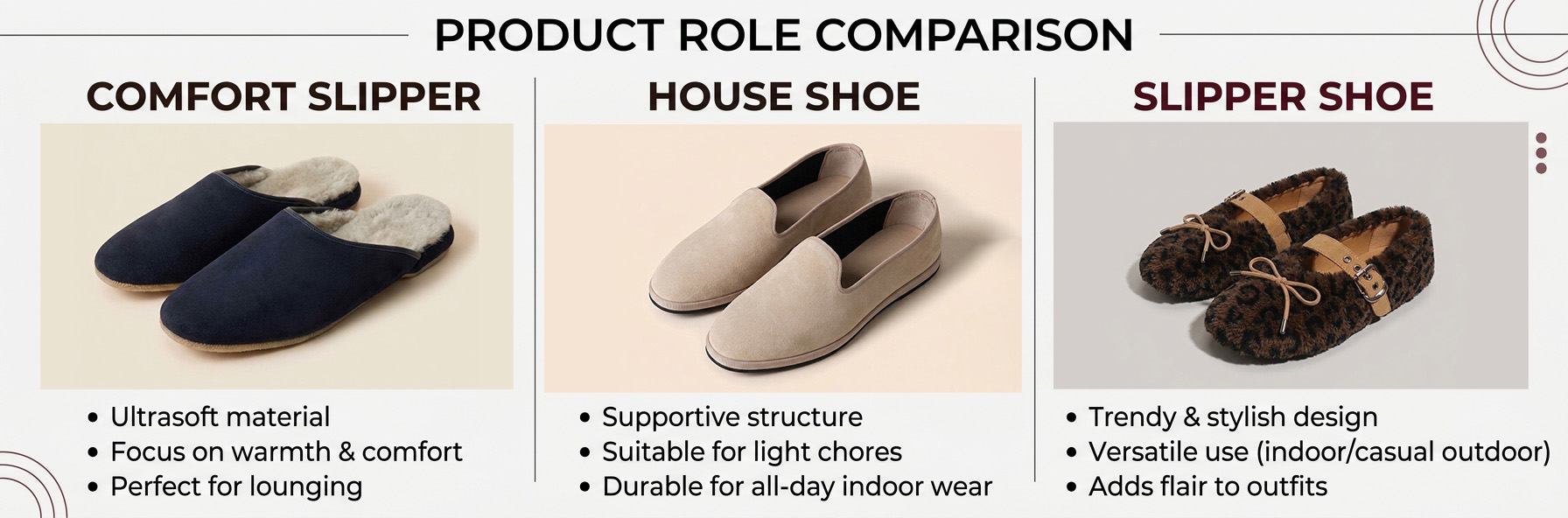
The difference is not the label on the product page; it is the job the footwear is expected to do. Buyers should define the product role before comparing colours, trims or reference images.
| Product role | Main use occasion | What must remain true |
|---|---|---|
| Comfort slipper | Mornings, evenings, warmth and rest | Soft, easy to put on and clearly indoor-focused |
| House shoe | Cooking, housework, working from home and longer indoor wear | Better grip, support, durability and a presentable shape |
| Slipper shoe | Short outdoor use, travel or fashion styling | Recognisable silhouette, suitable outsole, secure fit and materials that match the intended setting |
These roles can overlap, but they are not interchangeable. A leopard print does not make an indoor slipper an outdoor product, and a rubber sole does not automatically make a house shoe suitable for wet streets.
This distinction expands on our earlier look at the new direction of furry footwear. Furry footwear provided one early example; the larger change now affects how the whole slipper category is defined.
Which Slipper Trends Matter to Buyers Beyond Comfort?
The most useful trends are the ones that change the product's role or give the customer a clearer reason to wear it. Four signals matter more than a long list of fashionable details.
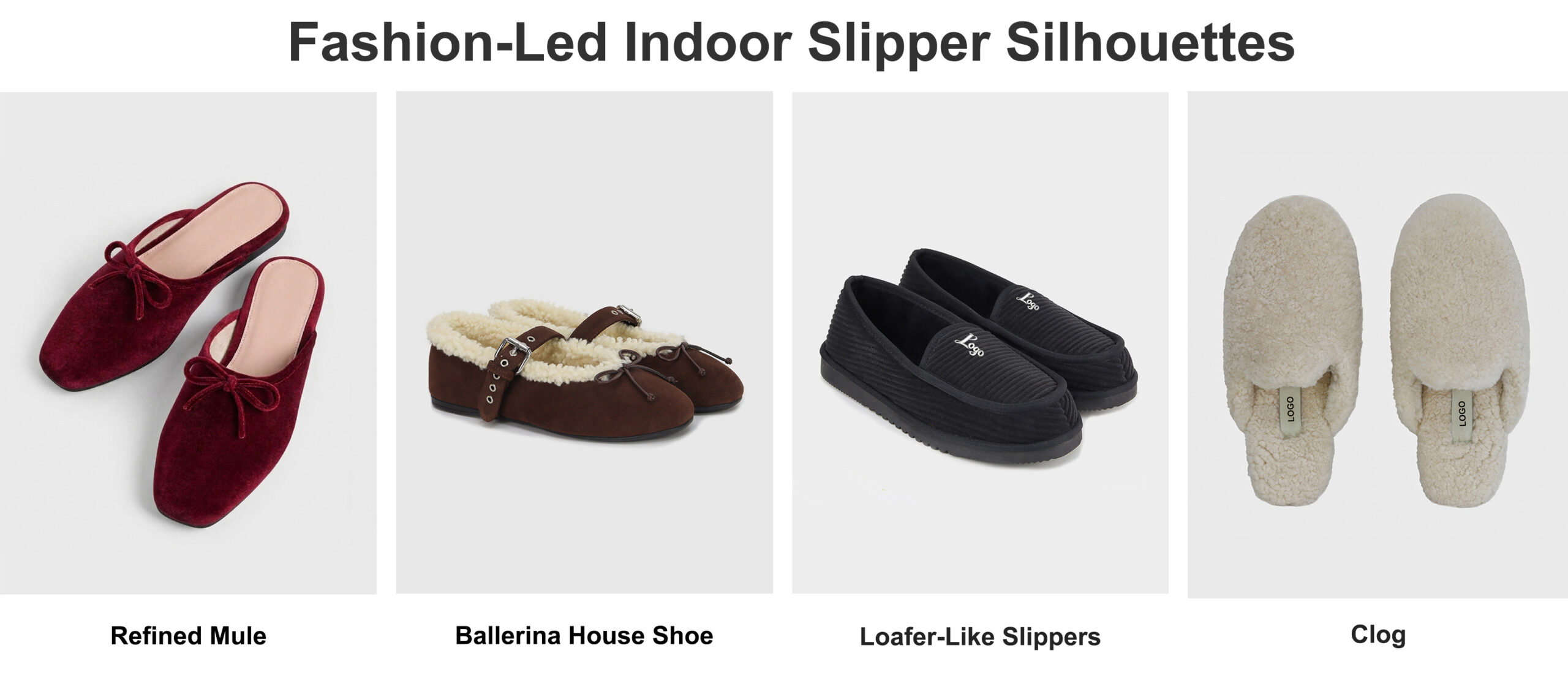
First, recognisable footwear shapes are entering the category. Ballerina-derived house shoes, refined mules, loafer-like slippers and clogs look more complete than a loose bedroom slide.
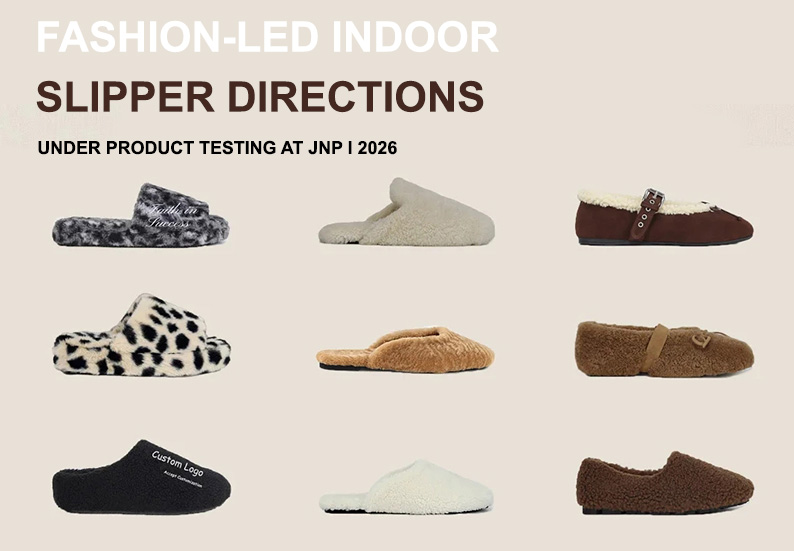
Second, materials and details carry styling value. Current Next slipper listings4 combine ballerina shapes with animal print, while Zara Home's slipper assortment5 includes faux-fur mules and velvet flatform slides. These pages show assortment direction, not sell-through.
Third, the use occasion is becoming more explicit. Some customers want a strictly indoor product; others want a shoe for the doorstep or a short trip outside. Indoor-outdoor use is not the automatic upgrade.
Finally, the product needs a clear relationship to the brand's loungewear, gifting, home or footwear offer. Without that role, a decorative slipper may remain an isolated image rather than a repeatable product.
What Should Buyers Check Before Adding Fashion-Led Slippers?
A buyer should validate the target customer, use boundary, comfort fundamentals and assortment role before approving a fashion-led slipper direction. The visual idea is only one part of the decision.
| Buyer question | Why it matters |
|---|---|
| Who is expected to buy it? | A boutique customer, gifting customer and homewear customer may accept different shapes, prices and levels of decoration. |
| Where will it be worn? | Indoor-only, quick-outdoor and city-wear products require different soles, materials and fit expectations. |
| What comfort promise is essential? | Grip, support, temperature, width and heel retention can decide whether the product works after the first impression. |
| What role does it play in the assortment? | A core house shoe, seasonal fashion item and visual statement SKU should not be developed or bought in the same way. |
The visible design may be useful as a market reference, but the commercial product still has to fit the brand's customer, price position and intended use.
For brands entering slippers for the first time, our guide to choosing a first slipper type6 explains why the product's role should come before the silhouette.
How Should a Buyer Validate a Fashion-Led Slipper Direction?
A trend becomes commercially useful only when repeated market signals lead to a focused product test and qualified buyer interest. Early visibility should be treated as a reason to observe, not as proof that a direction will sell.
In September 2026, JNP saw early platform activity around several indoor-slipper directions and added a limited number of products to controlled tests. We do not treat early clicks as a final conclusion. We first look for sufficient exposure, then assess whether the product attracts relevant inquiries.
This protects buyers from ignoring a direction until it is crowded or expanding too quickly because one image performs well. The test should reveal which product role and customer problem are creating interest.
Quick Answers for Slipper Buyers
These short answers summarise the category distinctions JNP uses before a buyer moves into sourcing or product development.
Are slippers in style for 2026?
Yes. Slipper-derived mules, ballerinas and clogs appear in 2026 fashion coverage and retail assortments, but not every indoor slipper is a fashion product.
What is the difference between a house shoe and a slipper shoe?
A house shoe is mainly for active indoor wear and prioritises grip, support and durability. A slipper shoe uses a recognisable fashion silhouette and may extend into travel or short outdoor use.
Can a fashion slipper still be indoor-only?
Yes. Fashion value can come from shape, colour, material and presentation. An indoor-only product does not need to claim outdoor performance.
What should a boutique buyer look for in stylish indoor slippers?
Look for a clear customer, a defined use occasion, one understandable style signal and comfort features that support the product's real job.
The 2026 slipper opportunity is not simply to make comfort products look more fashionable. It is to give each product a clearer identity without losing the function that makes a slipper worth wearing.
Yangzhou JNP Imp. & Exp. Co., Ltd. works as a footwear supply chain manager for fashion and lifestyle brands. Buyers can bring a target customer, intended use and reference direction to JNP, then discuss which silhouette, material and production path deserves a focused first test.
Footnote
-
British Vogue provides fashion-industry context for the 2026 slipper trend, showing how slipper-derived designs such as leather, suede, jacquard and silky styles are being presented beyond traditional homewear. This helps readers understand the fashion signal without treating it as proof of overall market demand. ↩
-
Circana provides broader U.S. footwear-market context, including the performance of categories such as mules, clogs and ballerinas in the first quarter of 2026. This helps readers distinguish wider footwear trends from the more specific indoor-slipper category. ↩
-
The AlixPartners–FDRA Spring 2026 footwear survey provides consumer evidence about casual-footwear purchasing and the growing importance of versatility. This helps buyers understand the broader consumer behavior that may be influencing how footwear categories are used and defined. ↩
-
Next's slipper assortment provides a concrete retail example of ballerina-inspired shapes and animal-print styling being applied to slipper products. It helps readers see how recognizable fashion details are entering commercial slipper assortments. ↩
-
Zara Home's women's slipper assortment illustrates how fashion-oriented materials and silhouettes, including faux fur and velvet styles, are being incorporated into a home/lifestyle retailer's slipper range. This helps readers evaluate assortment direction rather than assuming that decorative products automatically have strong sell-through. ↩
-
A resource explaining indoor-outdoor footwear helps buyers understand the distinction between products intended primarily for indoor use and products designed to transition outdoors. This is important when evaluating outsole construction, materials, grip and intended use. ↩